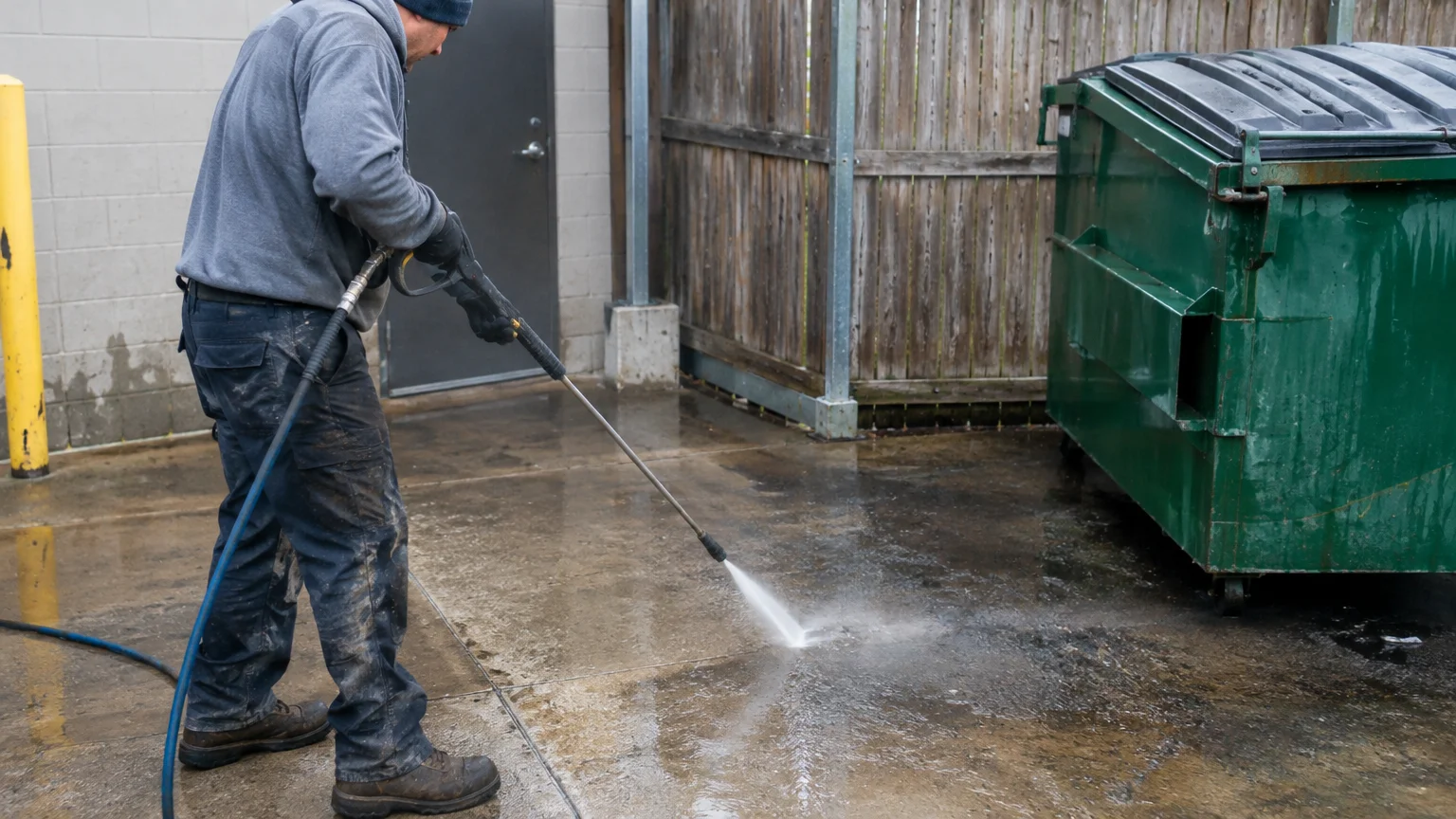
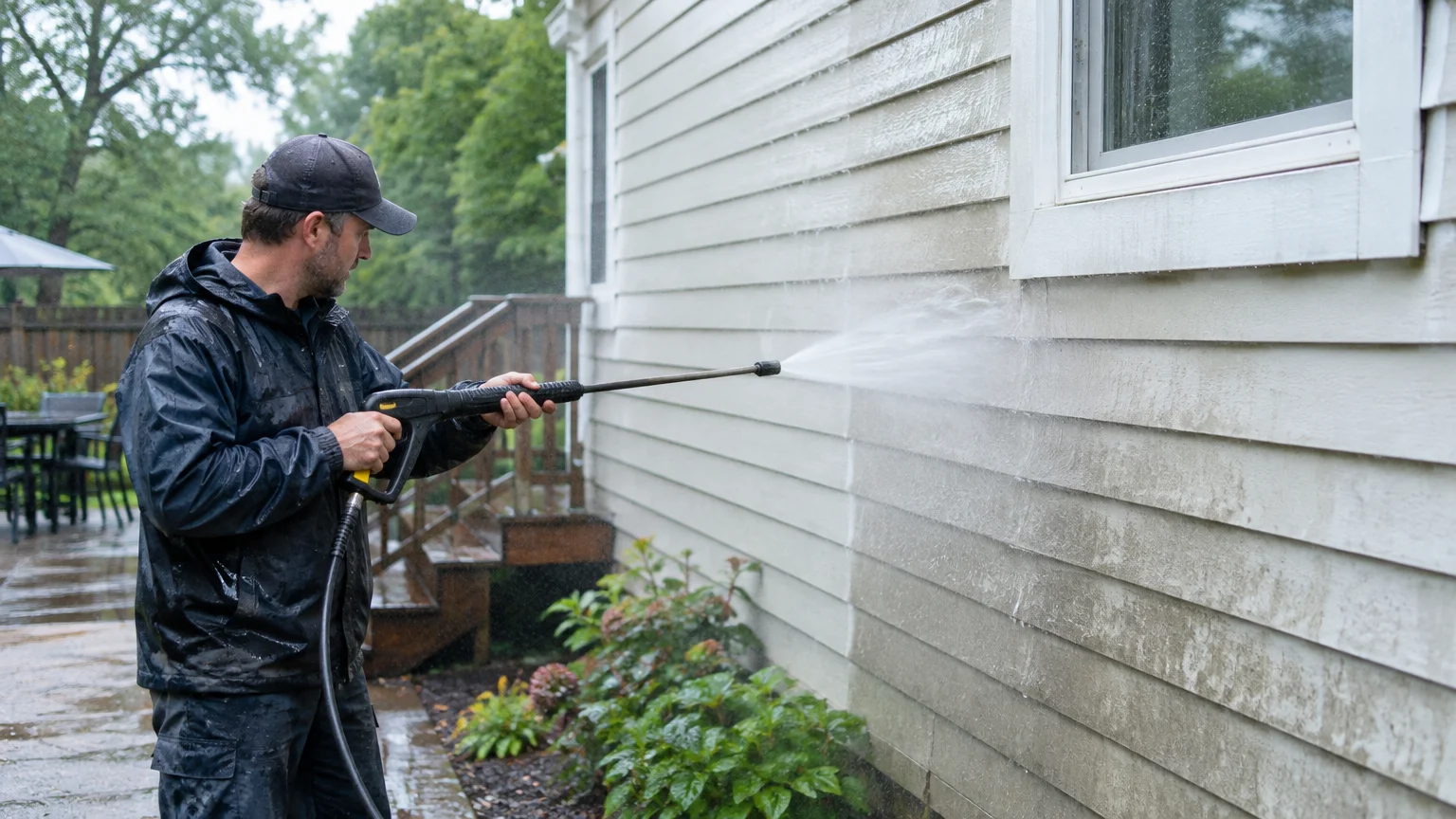
Garage floor power washing can remove loose dirt, tire marks, oil residue, and stuck-on grime from concrete slabs. The safest method starts by clearing the garage, picking the right cleaner, controlling water, and using enough pressure without harming the surface. Enclosed floors need more planning than open driveways because runoff has fewer escape routes.
Table of Contents
- How does garage floor power washing remove oil, tire marks, and grime?
- What should you do before power washing a garage floor?
- Which cleaning methods work best for oil stains on concrete?
- Can pressure washing remove tire marks from a garage floor?
- How do you manage water and runoff inside a garage?
- How often should a garage floor be professionally cleaned?
- What should you look for when choosing garage floor power washing?
How does garage floor power washing remove oil, tire marks, and grime?
Garage floor power washing combines pressurized water, safe cleaners, and surface scrubbing. A pressure washer sends water through a small opening at high speed. The correct setting can clean deep into concrete without leaving marks or removing weak areas.
Why enclosed concrete slabs need a different cleaning approach
An indoor slab may not drain water like a driveway. Water can collect near the garage door, reach walls, or run toward stored items. A careful plan controls water before washing starts. It also protects electrical tools, boxes, furniture, and personal items.
Concrete has small pores that can hold oil and dirt below the top. A quick rinse may remove loose soil but leave dark stains behind. Cleaning concrete often needs low-pressure pre-treatment, light scrubbing, and a controlled rinse. Very high pressure is not always the best choice.
The floor condition also matters. New concrete may clean evenly, while old or cracked slabs can shed small pieces. Sealed, painted, and epoxy floors each need a different method. A technician should test a small spot when the coating or slab is unclear.
Which types of buildup can pressure washing address?
Pressure washing can help with many common garage floor problems:
- Loose dust, dirt, and road film brought in by vehicles
- Tire marks from warm rubber rubbing against concrete
- Oil spots, grease, and fluid residue near parked vehicles
- Mud, salt residue, and damp organic buildup
- Food, drink, and workshop spills that have not soaked in deeply
Results depend on how long the stain has been there. Fresh residue often responds better than an old mark in the slab. Cleaning may lighten a set-in stain without removing it fully. Clear expectations help property owners choose the right service.
Los Angeles Power Washing helps property owners review garage slabs before cleaning. Similar stains outside may also need Driveway Cleaning Services. In Los Angeles, weather, vehicle use, and garage design can all affect the cleaning plan.
What should you do before power washing a garage floor?
Before washing, clear the floor, protect nearby items, inspect the concrete, and plan where water will go. These steps make the work safer and help prevent damage. A homeowner can handle basic clearing and a small fresh spill. Damaged slabs, heavy oil, and hard-to-control water may need professional help.
How to clear, inspect, and protect the garage space
Move vehicles, tools, boxes, shelves, and loose items away from the work area. Lift cardboard and fabric items off the floor, even when they seem far from the stain. Water can travel farther than expected on a sloped slab.
Sweep or vacuum loose dirt first. Then look for cracks, flaking paint, loose sealant, and weak concrete. Spalling means the surface is breaking away in small chips. Pressure can make this damage worse when the nozzle is held too close.
Cover items that cannot be moved. Plastic sheeting can protect walls and storage, but it should not trap water against finished surfaces. Keep garage door tracks, outlets, appliances, and power tools away from spray. A technician may suggest moving more items after checking the space.
What safety concerns should you check first?
Water and electricity create a serious risk. Unplug tools, move extension cords, and protect outlets from spray. Never aim water at a panel, outlet, furnace, water heater, or electrical equipment. Good airflow also matters when cleaners are used indoors.
Wear eye protection, gloves, and shoes with firm soles. Keep children and pets away from the work area. Do not mix cleaning products. Some cleaners can create harmful fumes or react with other products.
A homeowner does not need a professional for sweeping, moving light items, or cleaning a small fresh spill. Professional help is wise when the slab is badly cracked, the coating is peeling, oil covers a wide area, or runoff could enter the home. The same care applies before Concrete Cleaning Services are used on larger areas.
Which cleaning methods work best for oil stains on concrete?
Oil stains often respond best to a degreaser, waiting time, light scrubbing, and a controlled rinse. A degreaser is a cleaner made to break down oily residue. Pressure alone may spread oil instead of removing what has soaked into the concrete.
When to use degreasers and stain treatments
Blot fresh oil when possible. Absorbent material can lift some liquid before cleaner is added. Rubbing the spill may spread it farther. After loose oil is removed, apply a concrete-safe degreaser as the label directs.
The cleaner needs time to work. This time is called dwell time. It lets the product loosen the stain before rinsing. Keep the floor damp during this step, but do not let puddles spread toward walls or stored goods.
A stiff nylon brush or proper floor scrubber can lift residue. Metal brushes may scratch coatings or leave pieces behind. The method must match the floor. Painted and epoxy surfaces need products that will not dull, soften, or strip the finish.
Why set-in oil may require more than one treatment
Old oil can move deep into porous concrete. One cleaning pass may remove the surface film but leave a dark shadow below. Repeated treatment may improve the mark, but it cannot always restore the slab’s original color.
A strong chemical is not always a better choice. Harsh products can harm coatings, nearby metal, outdoor plants, or indoor air quality. A trained technician can identify the stain and test a cleaner in a small area first.
A homeowner may treat a small, fresh spot by following the product label. Professional service is better for large stains, unknown fluids, strong odors, or floors already treated with several products. Los Angeles Power Washing can help Los Angeles homeowners decide whether the slab needs simple cleaning, stain treatment, or a careful surface plan.
Can pressure washing remove tire marks from a garage floor?
Pressure washing can remove many tire marks, especially when they sit on the surface. Warm tires leave rubber behind when a vehicle turns sharply or rests in one place. Rubber can bond with dust, oil, and rough concrete, making the mark harder to remove.
How rubber transfer marks form on concrete
Tire marks often appear near parking spaces, garage entrances, and turning points. Heavy vehicles and repeated steering can create more transfer. Smooth, sealed floors may show marks clearly, while rough concrete can trap rubber in tiny pores.
First remove loose dirt. A cleaner can then soften the film before a brush or surface cleaner agitates it. A surface cleaner has a covered spinning spray bar. It spreads water more evenly than a narrow wand and can reduce streaks on suitable concrete.
Keep the nozzle moving. Holding a strong stream in one place can etch concrete or strip a coating. Start with a hidden test area. If the mark changes but remains, more pressure may not fix the deeper part of the stain.
When surface cleaning should be combined with agitation
Surface cleaning works well across broad areas with even concrete. A brush or spot treatment may still be needed around cracks, edges, joints, and heavy marks. Expansion joints are planned gaps that help concrete handle movement as temperatures change.
Rinse the floor in one controlled direction. This keeps dirty water from flowing back across clean areas. Collect leftover rubber or grease instead of pushing it toward a drain that cannot handle the flow.
Garage floor power washing works best when the cleaner, pressure, and agitation match the slab. The goal is not to use the strongest setting. Good work protects concrete while removing as much residue as the surface can safely release.
How do you manage water and runoff inside a garage?
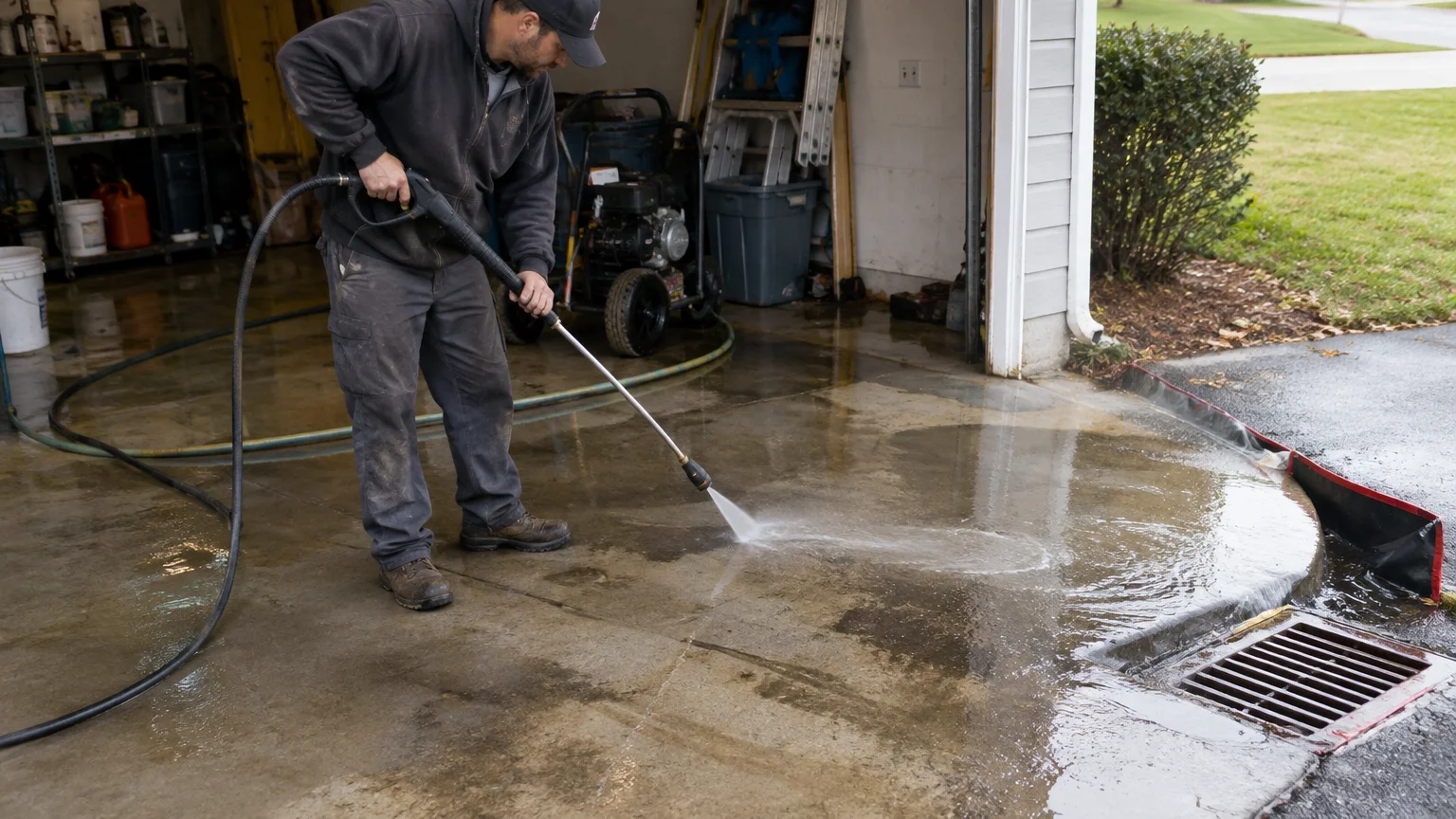
Water control is one of the most important parts of cleaning an enclosed slab. Before washing, check the floor slope, door threshold, drains, low spots, and nearby rooms. The goal is to contain dirty water and keep it away from the home and unsafe equipment.
Drainage options for enclosed slabs
Some garages have floor drains, trench drains, or a slight slope toward the door. Others have no useful drain. Never assume a drain can accept oily water or large amounts of sediment. Local rules may also affect wastewater handling.
Water can be guided with a squeegee, absorbent barriers, wet vacuum, pump, or collection system. The best option depends on the floor and the amount of water used. A small spot may need simple wiping, while a full garage needs planned recovery.
Do not send oil, grease, or chemical residue into a storm drain. Storm drains may lead to waterways without treatment. When water cannot be released safely, a professional can use less water or collect the runoff.
How to protect walls, stored items, and nearby surfaces
Water barriers can protect door thresholds and wall edges. Move stored items well away from the cleaning zone. Plastic covers help, but distance and careful spray control matter too.
Check the garage door before work begins. Water can collect beneath the door or run onto the driveway. Outdoor areas may need protection from dirty runoff. This matters even more when the garage connects to a finished room.
A professional may use controlled flow, a wet vacuum, or a recovery plan. Stop work if water reaches electrical equipment, walls, or living areas. Parking Lot Cleaning Services and other outdoor work also need runoff planning, but an enclosed garage gives water fewer safe paths.
How often should a garage floor be professionally cleaned?
There is no single schedule for every garage. Cleaning depends on vehicle traffic, workshop use, spills, moisture, pets, climate, and concrete condition. Light-use garages may need occasional deep cleaning. Active workshops may need attention whenever buildup affects safety or appearance.
Signs that routine cleaning is overdue
A garage floor may need cleaning when it feels slick, smells like oil, shows broad dark tracks, or has dirt that sweeping cannot remove. Address new stains early when possible. More time lets oil and grime move farther into the concrete.
Other signs include dark water near the door, tire marks in driving lanes, and buildup around workbenches. A dull or uneven look may also point to old cleaner residue. Find the cause before applying another product.
Cleaning should not hide a repair problem. Cracks, settling, loose coatings, and standing water may need separate attention. Washing can make these issues easier to see, but it does not repair structural damage.
How garage use and concrete condition affect timing
A garage used for repairs, woodworking, gardening, or vehicle storage collects more residue. Snow, mud, road salt, and wet weather can also bring in more soil. Coated floors may need gentler cleaning to protect the finish.
Routine sweeping and quick spill cleanup can reduce deep washing. A homeowner can use a broom, absorbent material, and a suitable cleaner for small messes. Professional cleaning helps when the area is large, the stain is old, or runoff control is difficult.
Los Angeles Power Washing serves property owners throughout the main Los Angeles area, including Downtown Los Angeles, Hollywood, Beverly Hills, Glendale, Culver City, Santa Monica, and nearby communities. A garage in Los Angeles may need a different schedule than a patio or driveway. Patio Cleaning Services can address outdoor slabs, while an inside floor needs careful water control.
What should you look for when choosing garage floor power washing?
A good provider should explain how the concrete, coating, stains, and runoff will be handled. The strongest chemical or highest pressure is not always best. A careful plan should protect the slab and nearby property.
Questions about equipment, cleaning solutions, and runoff control
Ask whether the provider will test a small area first. Ask which cleaner fits the floor coating, how water will be contained, and how electrical equipment will be protected. Clear answers show that the provider understands enclosed surfaces.
Useful questions include:
- Will the slab be checked for cracks, spalling, paint, or epoxy?
- Will the cleaning method match the concrete or coating?
- How will dirty water stay away from walls and stored items?
- What happens if oil remains after the first treatment?
- Will the garage door, outlets, and nearby equipment be protected?
A provider should not promise that every stain will disappear. Concrete varies from slab to slab. An honest explanation of likely results is more useful than a guarantee that ignores surface condition.
How to prepare for a professional garage floor cleaning
Move vehicles and loose items before the appointment. Remove boxes, rugs, tools, and chemicals from the floor. Point out stains, cracks, drains, low spots, and areas that must stay dry. If the garage connects to the home, identify the threshold needing extra protection.
Mention past treatments too. Bleach, degreasers, sealers, and paint can change how the slab reacts to water. This information helps the technician choose a safer method.
Professional cleaning may be best for heavy oil, set-in grime, damaged concrete, or poor drainage. Los Angeles Power Washing works with homeowners and property owners who need a practical plan for enclosed concrete surfaces. Contact us to discuss the garage floor and arrange the next step.
Key takeaways
- Garage floors need special planning because water has limited escape routes.
- Degreasers, dwell time, and light agitation often work better than pressure alone.
- Tire marks may need both a surface cleaner and spot scrubbing.
- Cracks, coatings, outlets, stored items, and runoff should be checked first.
- Homeowners can handle light upkeep, while heavy stains and drainage concerns may need professional help.
Frequently Asked Questions
Can a homeowner power wash a garage floor?
Yes, a homeowner can clean a small area when the slab is sound and water can be controlled. Basic work includes sweeping, treating a fresh spill, and using a concrete-safe cleaner. Professional help is safer for heavy oil, damaged concrete, coatings, electrical risks, or runoff that could enter the home.
What cleaner should be used on an oily concrete garage floor?
A concrete-safe degreaser is often a good starting point. The product should match the slab or coating, and label directions should be followed. Stronger is not always better. A small test area can show whether the cleaner dulls, softens, or changes the surface.
Can pressure washing damage a garage floor?
Yes, too much pressure or a nozzle held too close can etch weak concrete, remove coating, or leave streaks. Damage is more likely on cracked, flaking, or soft slabs. A moving spray, suitable cleaner, and test area help reduce risk during garage floor power washing.
Why do oil stains remain after cleaning?
Oil can soak into concrete pores, especially when the stain is old. The first cleaning may remove surface residue but leave darker material below. A second treatment may improve the look, but some set-in stains cannot be fully removed without changing the concrete surface.
How can dirty water be kept out of the house?
Before washing, identify the slope, threshold, drains, and low spots. Barriers, squeegees, wet vacuums, pumps, or low-water methods can help contain runoff. Keep electrical equipment and stored items away from spray, and do not let oily water enter a storm drain.
Conclusion
A clean garage floor starts with more than a powerful spray. The best results come from checking the slab, choosing the right cleaner, treating stains carefully, and managing water from start to finish. Homeowners can handle simple upkeep, while difficult stains and drainage risks need a careful professional plan.
If you are unsure what you are dealing with, have the floor checked before the problem grows. Contact us at Los Angeles Power Washing today to discuss your garage floor.