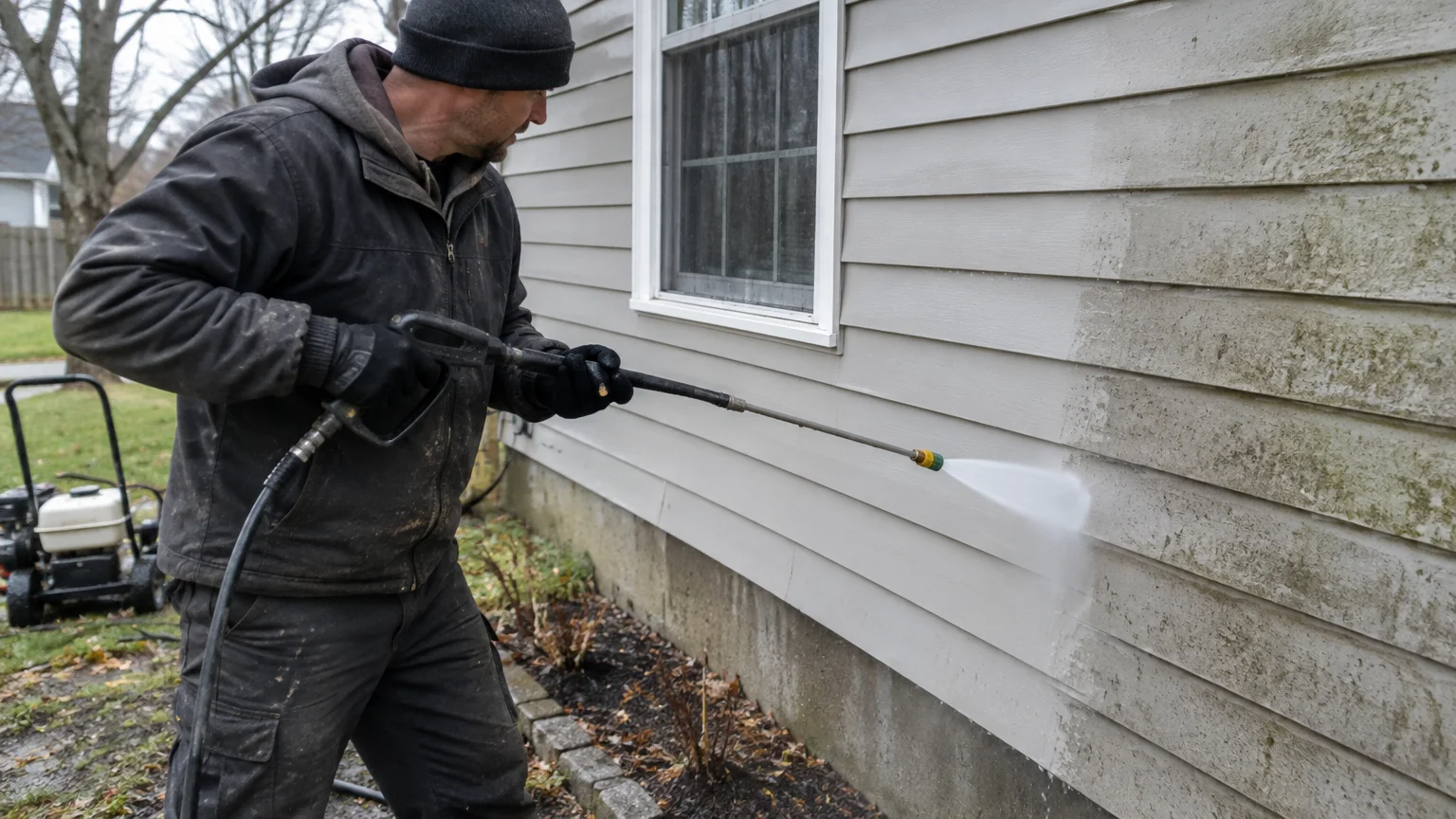
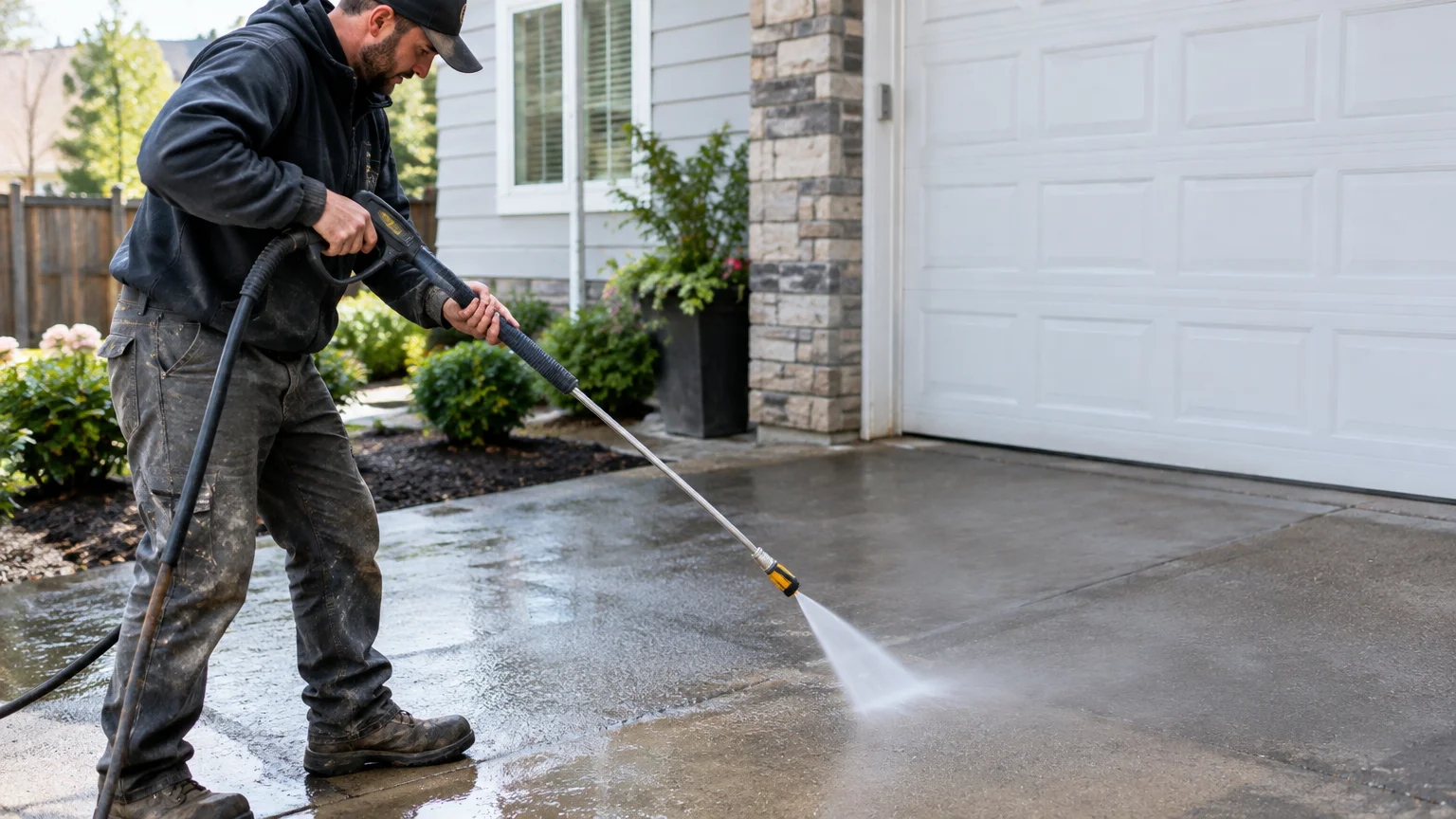
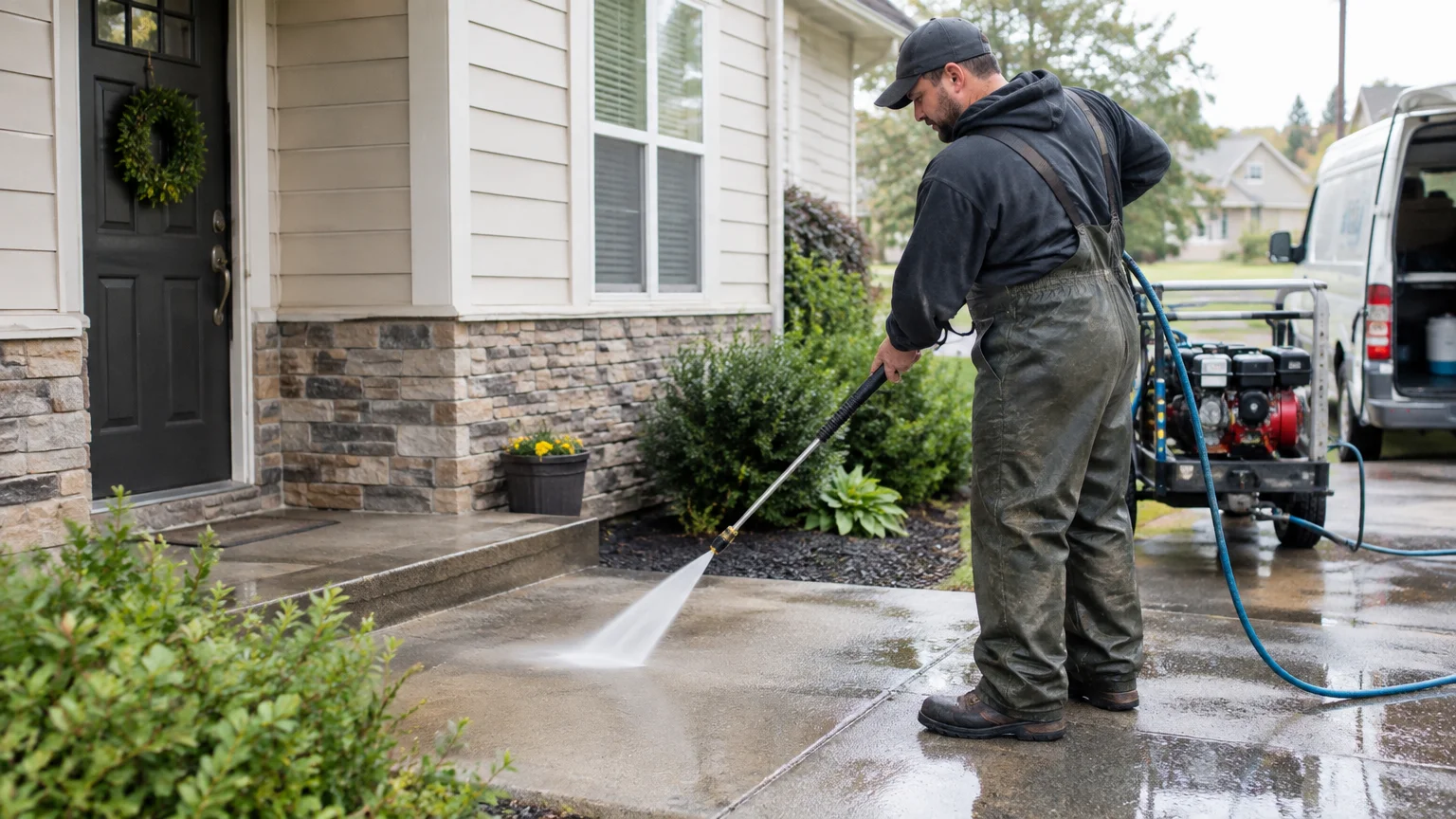
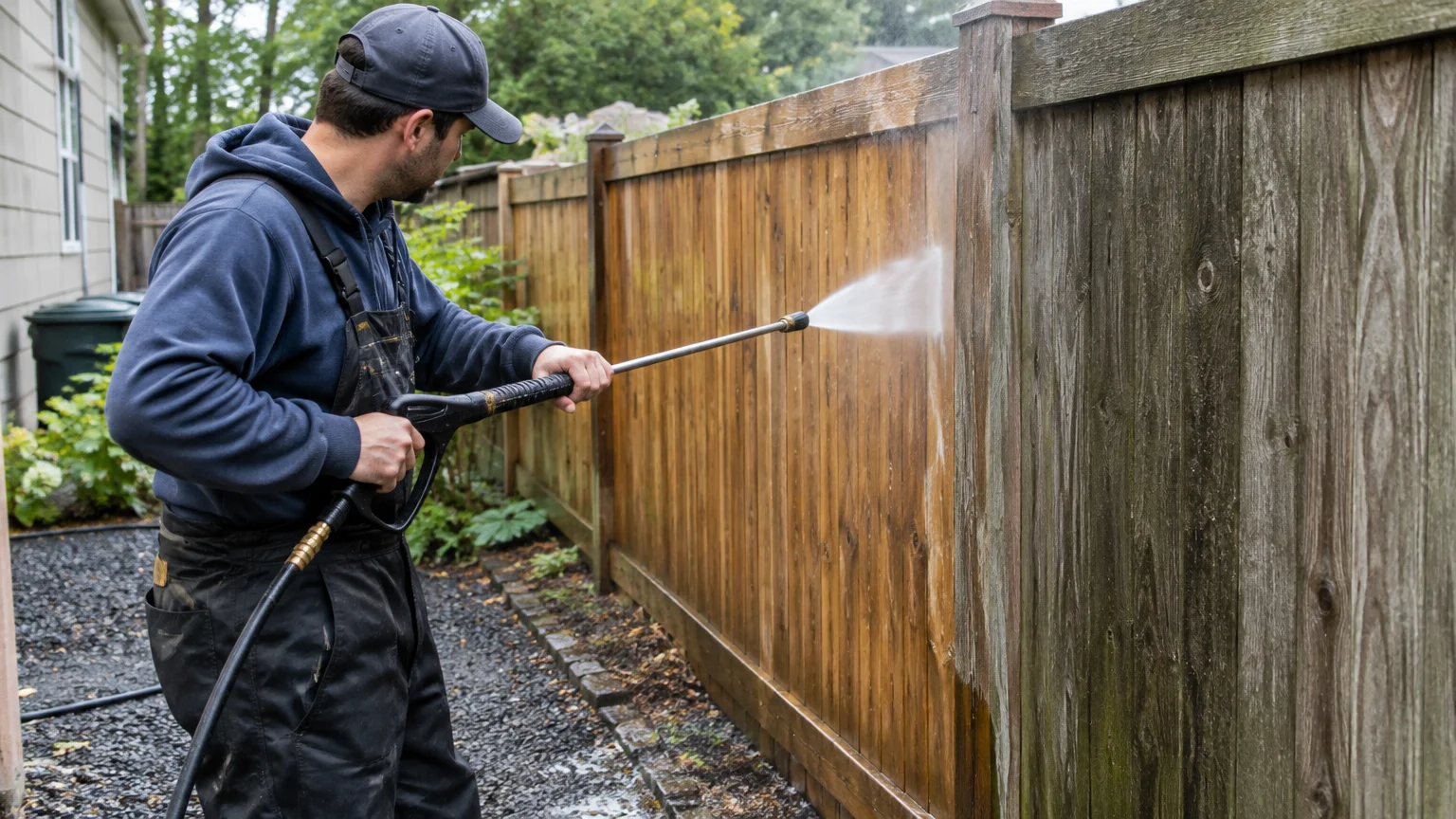
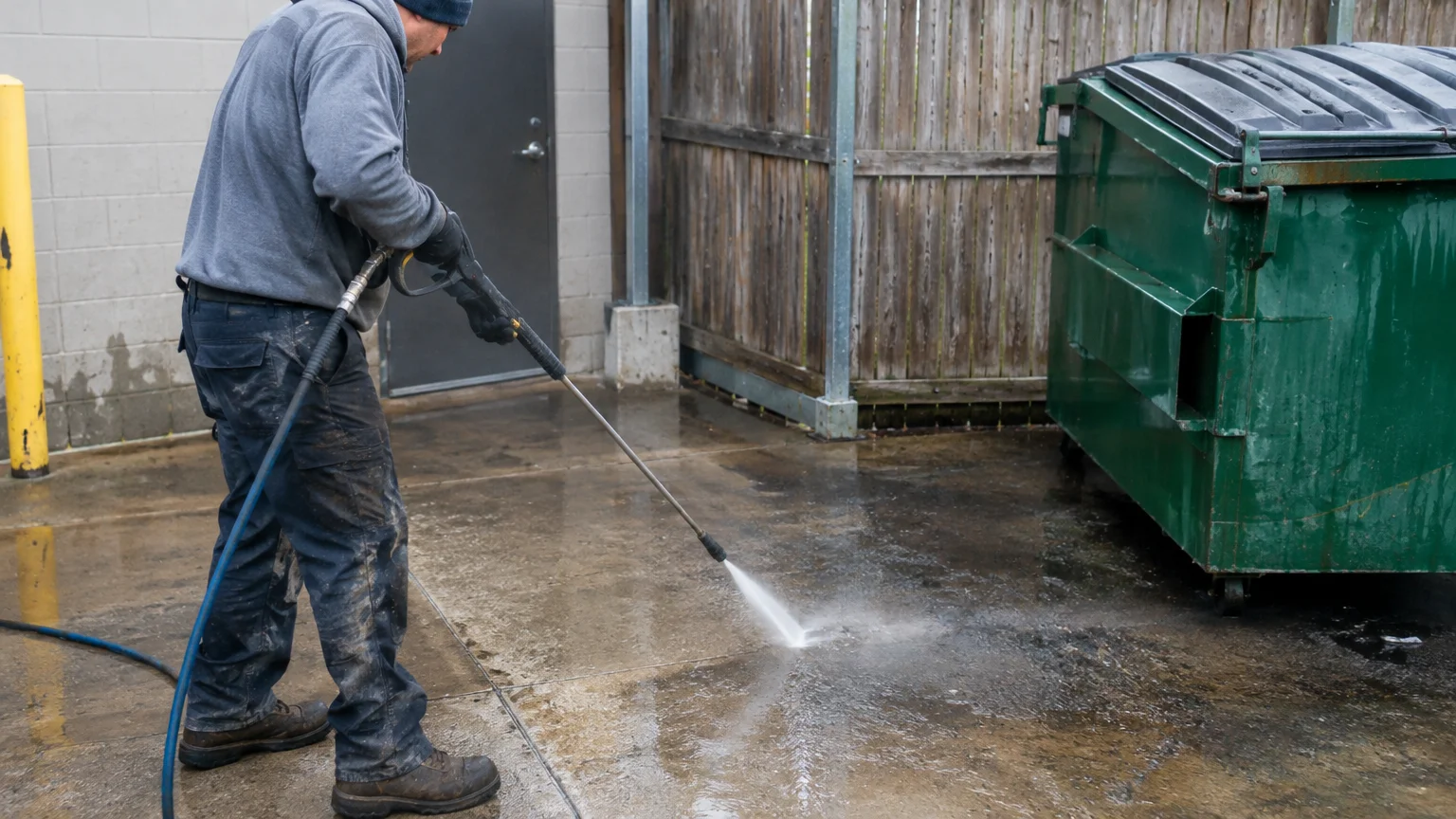
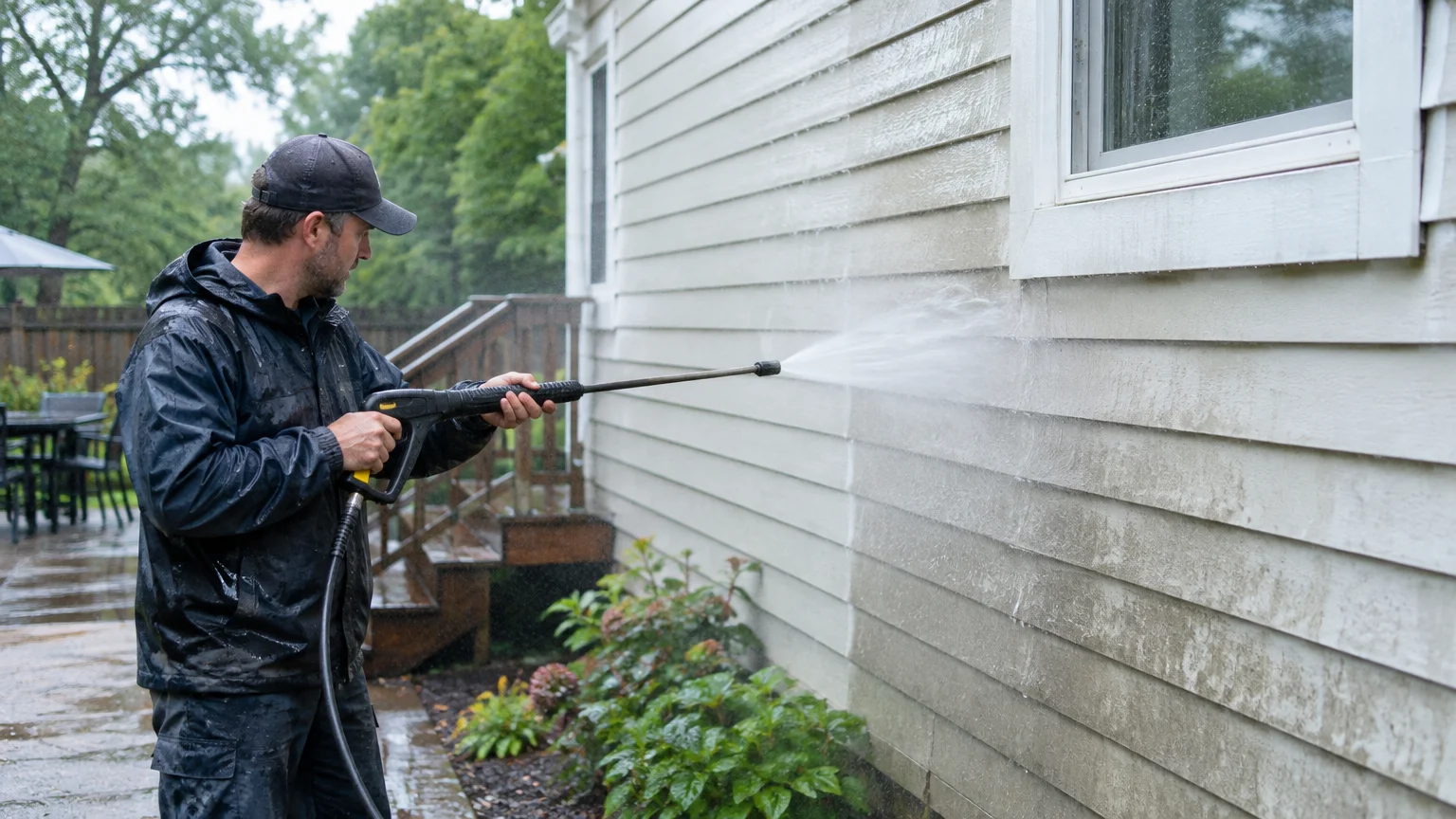
Power washing house before painting removes dirt, mildew, loose paint, and chalk from exterior walls. The surface should be clean, dry, sound, and free from loose debris before primer or paint is used. The best washing method depends on the siding, masonry, weather, surface condition, and drying time.
Table of Contents
- Why should you power wash a house before painting?
- What should the surface look like after pressure washing?
- Which exterior surfaces need different washing methods?
- How long should you wait to paint after power washing?
- Can pressure washing damage a house before painting?
- What should homeowners inspect before the painter arrives?
- Should you hire a professional to wash your house before painting?
- Frequently Asked Questions
Why should you power wash a house before painting?
Power washing before painting removes dirt that can stop paint from sticking well. It also reveals damage that may need repair first. A clean wall gives the painter a better base and helps the new coat look even.
How exterior washing affects paint adhesion
Paint adhesion means how well paint sticks to a surface. Dust, pollen, grease, mildew, and loose chalk can sit between the wall and new paint. When they remain, paint may peel, blister, or flake sooner.
Washing does not replace scraping, sanding, priming, or repairs. It is one part of surface preparation. After washing, the painter can remove loose paint and smooth rough spots. A clean wall also makes cracks, failed caulk, soft wood, and damaged siding easier to see.
The washing method should fit the home. Many siding materials need a soft wash, which uses low water pressure and a cleaning solution. Brick and some masonry may need another method, since old mortar can be weak. Careful washing protects the wall while removing the film that blocks paint.
What dirt, mold, mildew, and chalking can hide
Mildew is a surface fungus that often grows in damp places. Mold and algae can leave dark stains and may return when moisture remains. Washing removes much of this growth, but it does not fix leaks, poor drainage, or trapped water.
Chalking is a powder left behind when old paint breaks down. You can test for it by rubbing a clean hand over the wall. If white or colored powder gets on your hand, the painter may need more cleaning, surface work, and the right primer.
Los Angeles Power Washing helps property owners prepare exterior walls before painting. House Washing Services can clean siding, brick, stucco, gutters, and other dirty areas. The goal is not only a brighter wall. It is a surface the painter can inspect and prepare with care.
What should the surface look like after pressure washing?
After washing, the surface should look clean and free of loose dirt, heavy mildew, and flaky debris. It should also stay intact, with no new cuts, broken seals, or exposed areas. A clean wall is ready for paint only after it is dry and sound.
Signs the siding, brick, or stucco is properly cleaned
A properly cleaned wall often has a more even color. Dark streaks, green growth, cobwebs, and dusty buildup should be gone or much lighter. Some old stains may remain if they have soaked into the material, but loose dirt should not remain on top.
Check corners, areas under eaves, behind downspouts, and around windows. These spots often stay dirty because they get less sun or collect runoff. Lower walls also need care because soil can splash up from the ground.
A clean wall does not have to look new. Old paint may still show color changes after washing. The key question is whether the remaining coating is firm and safe to paint. Loose or peeling paint still needs scraping and other prep work.
Why a clean surface must also be dry and sound
Water trapped under trim, siding edges, or caulk can cause trouble after painting. Damp wood, wet masonry, and shaded walls may also stay wet inside. Painting too soon can trap moisture and lead to poor bonding, stains, or blisters.
The wall should also be sound. This means it has no soft wood, open cracks, loose mortar, or failing boards that need repair. Washing can uncover these problems, which helps the homeowner and painter plan the next step.
The final surface should be clean but not damaged. Look for fresh marks on siding, broken window seals, or water forced behind openings. If the wall looks clean but has damage, wait until the cause is fixed.
Which exterior surfaces need different washing methods?
Exterior materials need different water pressure, cleaners, and tools. Vinyl siding, wood, fiber cement, brick, and stucco do not react in the same way. One setting for every surface can cause damage or leave dirt behind.
Preparing vinyl siding, wood, and fiber cement
Vinyl siding often responds well to low-pressure washing with a suitable house washing solution. The spray should follow the siding instead of forcing water behind its seams. Windows and doors need extra care because water may enter small gaps.
Wood siding needs a gentle method. High pressure can cut wood fibers, leave marks, or push water into joints. Older wood may also have weak paint and open areas. The surface should be cleaned without removing sound material.
Fiber cement is strong, but its edges, joints, and paint film still need care. A controlled wash can remove dirt and mildew before painting. The cleaner should avoid damaging seams or driving water behind the boards. Once dry, the painter can check where caulk or primer is needed.
Cleaning brick, stucco, and painted masonry safely
Brick can collect soot, algae, and white mineral deposits. The mortar between bricks may be softer than the brick. Strong pressure can remove mortar or leave marks, especially on older walls. A small test area shows how the surface may respond.
Stucco has a textured face with many small openings. Water and cleaning products should be used with care so they do not enter cracks. Loose stucco must be repaired before painting. Washing alone cannot fix a weak surface.
Painted masonry may have chalking, stains, and worn areas. The cleaning plan should remove loose residue while keeping sound paint in place. Homeowners looking for pressure washing near me should focus on the method, not just the machine. The service should understand the wall material and painting plan.
How long should you wait to paint after power washing?
A house should be fully dry before painting. Warm, sunny weather may help, while shade and damp air slow drying. The wait depends on the material, rain, humidity, airflow, sunlight, and the amount of water used.
What affects exterior drying time
Porous materials hold water longer than smooth siding. Brick, stucco, wood, and older masonry can stay damp inside their pores even when the surface feels dry. A painter may check several areas instead of trusting one dry-looking wall.
Deep shade also slows drying. Walls under trees, covered porches, and north-facing sides often need more time. Water can stay around trim, gutters, joints, and window edges. These spots need a careful check before primer or paint.
The cleaning size matters too. A light wash may dry sooner than a full exterior wash. Open cracks and damaged caulk can hold moisture and must be repaired before painting.
How weather and shaded areas change the schedule
Dry weather with good airflow usually helps a wall dry. Humidity, clouds, rain, and still air slow the process. A sudden storm can wet the surface again, so the work schedule may need to change.
Ask the painter and cleaner to plan the work together. Paint labels may list limits for moisture, temperature, and weather. Those directions matter more than one fixed drying rule.
A short delay is safer than a rushed job. Waiting until the wall is truly dry helps primer and paint work as intended. Los Angeles Power Washing can help Los Angeles property owners plan cleaning around the painting date and local weather.
Can pressure washing damage a house before painting?
Yes, pressure washing can damage a home when the pressure, nozzle, distance, or cleaner is wrong. Problems may include cut siding, lifted paint, damaged mortar, broken screens, and water behind walls. Careful work lowers these risks.
Common risks from excessive pressure or poor technique
High pressure can scar wood and strip sound paint. It can also force water behind vinyl siding, under trim, or into wall openings. On masonry, a strong spray may wear soft mortar or harm a weak surface.
The machine matters, but the operator matters more. Spraying too close to a delicate surface can cause damage. Hoses, tips, and extension tools should also be checked before work begins.
A pressure washing machine rental may seem useful for a small job, but the homeowner still needs the right method. A rental does not provide material knowledge or repair judgment. The safest choice depends on the wall, its age, its coating, and the condition of its joints.
How professionals protect windows, trim, landscaping, and openings
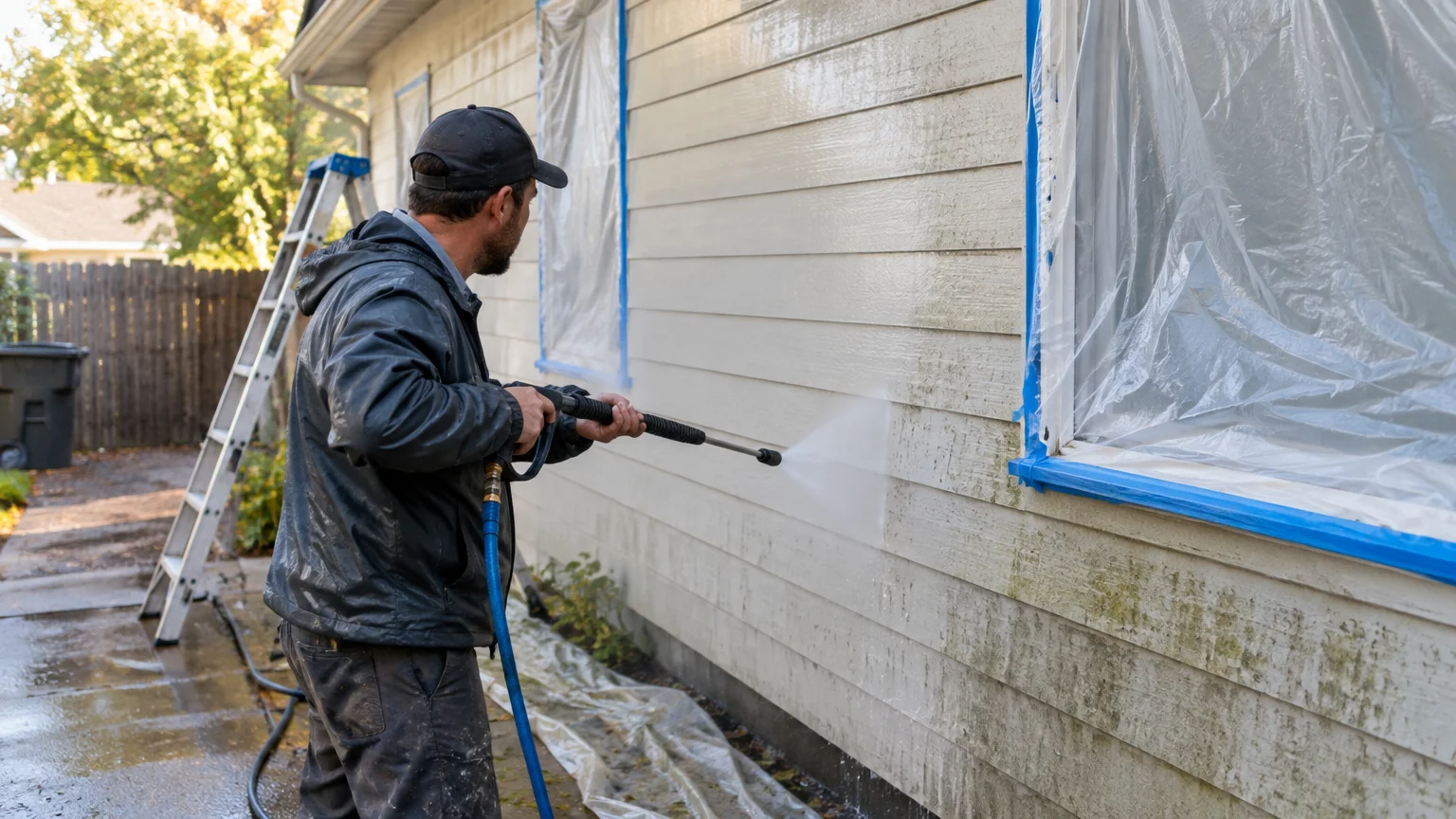
A careful cleaner checks the home before spraying. Windows, doors, vents, lights, outlets, and damaged areas may need protection. Plants and outdoor items should be moved or covered when needed. The spray should stay controlled around openings and fragile trim.
Cleaning products also need safe handling. Plants may need water before and after the work. Runoff should be managed so it does not harm landscaping or flow into unwanted places. The cleaner should follow product directions and use proper safety gear.
Homeowners can move patio items, trim branches away from walls, and note existing damage. They should not climb unsafe ladders or spray electrical areas. Professional help is better for tall homes, fragile walls, or work that is hard to control.
What should homeowners inspect before the painter arrives?
Homeowners should check the washed exterior for loose paint, cracks, soft areas, failed caulk, and damp spots. Washing reveals problems, but it does not prepare every surface for paint. A short review can help prevent delays.
Surface repairs, peeling paint, and caulking to address
Peeling paint usually needs scraping and prep before new paint covers it. Deep cracks may need repair instead of simple paint. Soft wood can point to water damage, while open joints may let water enter behind siding or trim.
Caulk is a flexible seal used to close small gaps around trim and joints. Failed caulk may look cracked, loose, or separated. The painter can remove weak caulk and replace it after the area is clean and dry.
Also check gutters, downspouts, flashing, and areas below windows. These parts can send water against the wall and create repeated stains. Fixing the water path can help keep new paint cleaner.
A practical pre-paint washing checklist
Use this checklist with the painter or cleaner:
- Confirm that siding, brick, stucco, and trim are free of loose dirt.
- Check corners, eaves, downspouts, windows, and shaded walls for missed growth.
- Look for peeling paint, open cracks, soft wood, loose mortar, and damaged boards.
- Make sure the wall, joints, and trim are fully dry before painting.
- Mark areas that need scraping, sanding, caulking, repair, or primer.
- Check that plants, outdoor items, windows, and openings were protected.
You do not need special tools for this review. Good daylight and a slow walk around the house can reveal many issues. If something looks uncertain, ask the painter or cleaner to check it before work continues.
Should you hire a professional to wash your house before painting?
A homeowner may handle light dust and simple upkeep. Professional washing is safer when the home is tall, heavily dirty, delicate, or hard to reach. The right service can match the method to the material and leave a better surface for the painter.
When professional exterior cleaning is the safer choice
Professional help makes sense when siding has heavy mildew, several materials meet, or the home has old paint. It can also help with large homes, steep areas, fragile stucco, and walls near delicate plants. A trained cleaner can spot risks before they cause damage.
Ask what method will be used for each surface. The answer should explain pressure control, cleaning products, protection for openings, and drying needs. It should also explain that washing does not replace repairs, scraping, sanding, or priming.
For a small, easy-to-reach area, a homeowner may clean by hand with basic tools. Follow the product label and avoid unsafe heights, electrical hazards, and strong spray near openings. When the task feels hard to control, professional exterior cleaning is the better choice.
How to coordinate washing with your painting project
The cleaner and painter should know the planned order of work. Washing normally comes before final scraping, repairs, caulking, priming, and painting. The painter needs time to inspect the wall and confirm that it is dry.
Share details about old paint, past leaks, known repairs, and shaded areas. Ask the cleaner to note problems found during the wash. This creates a clear handoff and lowers the chance that a hidden issue gets covered too soon.
Los Angeles Power Washing works with homeowners and property owners, including Downtown Los Angeles, Hollywood, Beverly Hills, Glendale, Culver City, Santa Monica, and nearby areas. The work can be planned around the surface type, project schedule, and condition of the exterior.
Key takeaways
- Wash before painting to remove dirt, mildew, chalk, and loose debris.
- Use the right method for vinyl, wood, fiber cement, brick, and stucco.
- Wait for a fully dry surface before primer or paint is applied.
- Inspect after washing for peeling paint, cracks, soft areas, and failed caulk.
- Choose professional help when height, access, materials, or damage create risk.
Conclusion
Power washing house before painting is an important prep step, but it is not the whole painting process. The wall must also be dry, sound, repaired, and ready for primer. A careful cleaning plan helps protect the home and gives the painter a better surface.
Contact us to schedule house washing with Los Angeles Power Washing before a painting project.
Frequently Asked Questions
What psi pressure washer do I need to clean siding?
Most siding should not be cleaned with the highest pressure available. Vinyl and painted surfaces often need controlled, low-pressure washing with the right cleaner. The safe setting depends on the material, age, coating, and condition. A professional can test a small area first.
What psi should be used to wash vinyl siding?
Vinyl siding usually needs less pressure than brick or concrete. Too much force can drive water behind panels or damage the surface. Keep the nozzle at a safe distance and follow the siding. Soft washing is often safer than aggressive pressure washing.
How often should a house be power washed?
No schedule fits every home. Climate, shade, trees, dust, drainage, and nearby plants affect how fast dirt returns. Many homeowners wash when the exterior looks dirty or before a large project. Regular checks help stop buildup from becoming harder to remove.
Can a homeowner wash the house before painting?
Yes, a homeowner can clean a small, easy-to-reach area when the surface is sound and the method is mild. Avoid ladders, electrical areas, fragile materials, and strong spray near openings. Professional help is safer for tall homes, heavy dirt, or mixed materials.
How often should a hotel be pressure washed?
A hotel may need more frequent cleaning than a private home because of traffic, guests, parking, weather, and public view. The right schedule depends on the building materials and local conditions. Managers should check high-use and shaded areas, then plan cleaning before grime affects appearance or safety.
If you are unsure what you are dealing with, have the surface checked before a small issue becomes a larger job.
If you are not sure what you are dealing with, it is worth having someone look at it before it turns into a bigger job. Get in touch with Los Angeles Power Washing today and we will tell you where you stand.