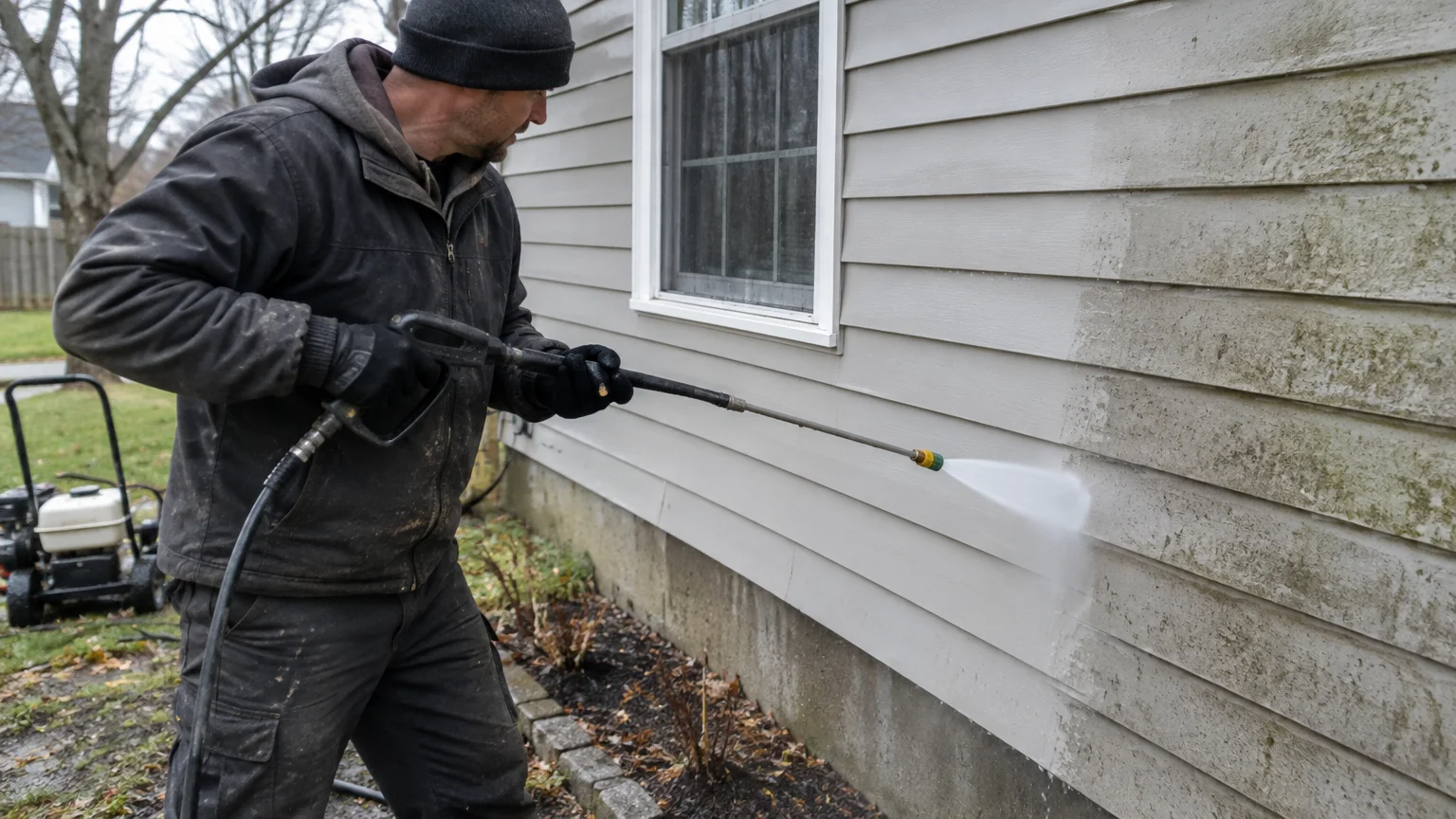
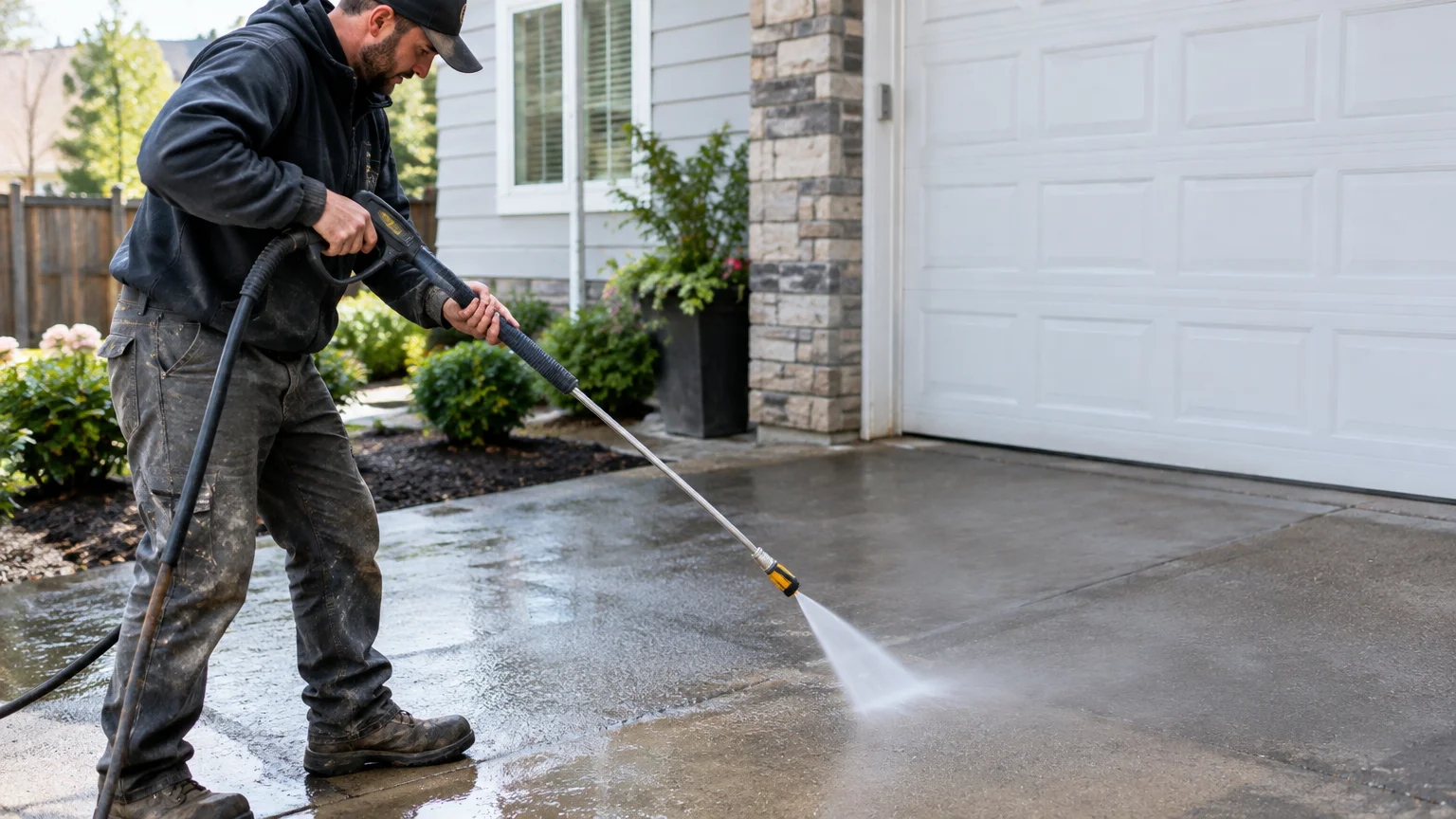
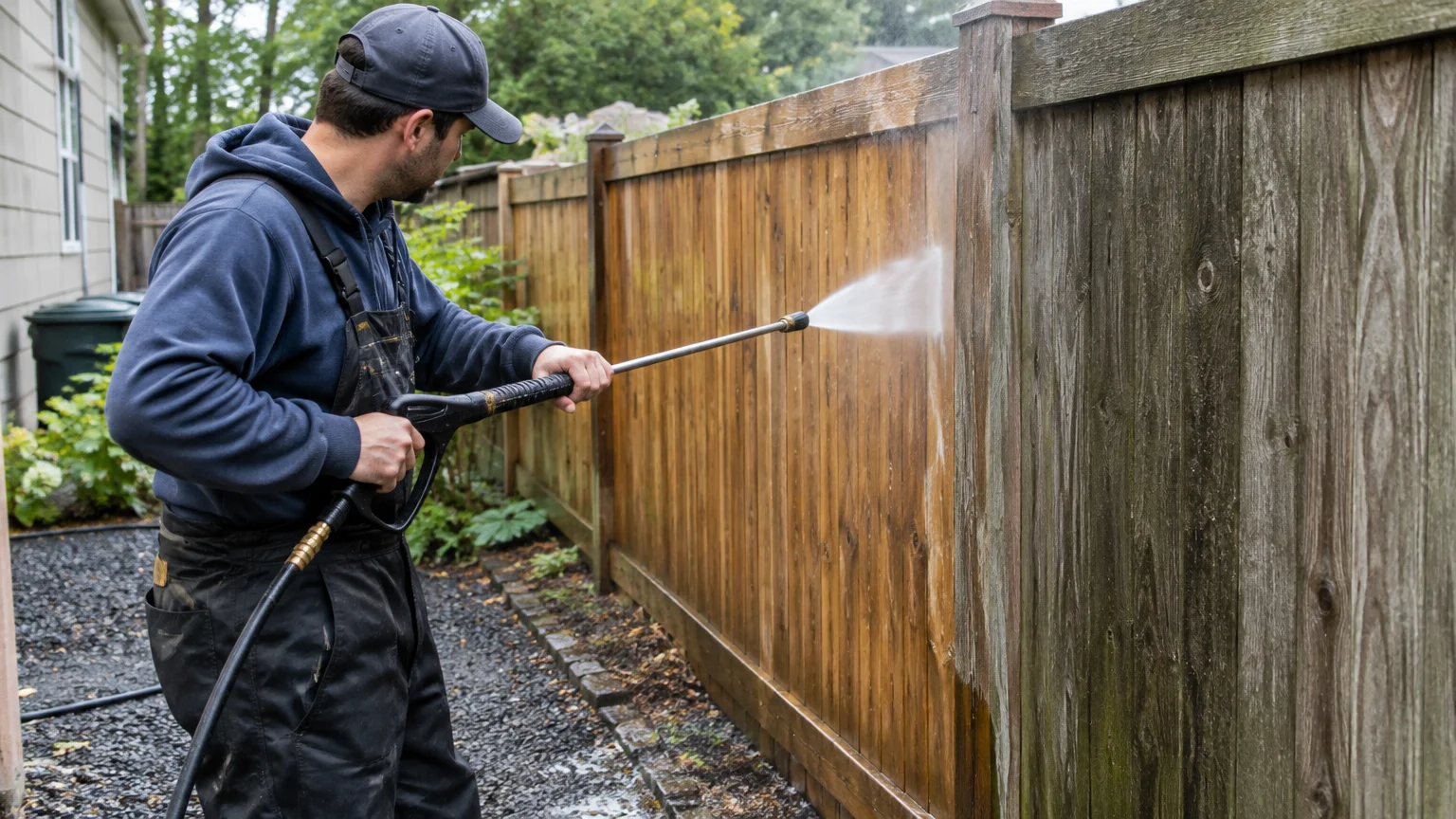
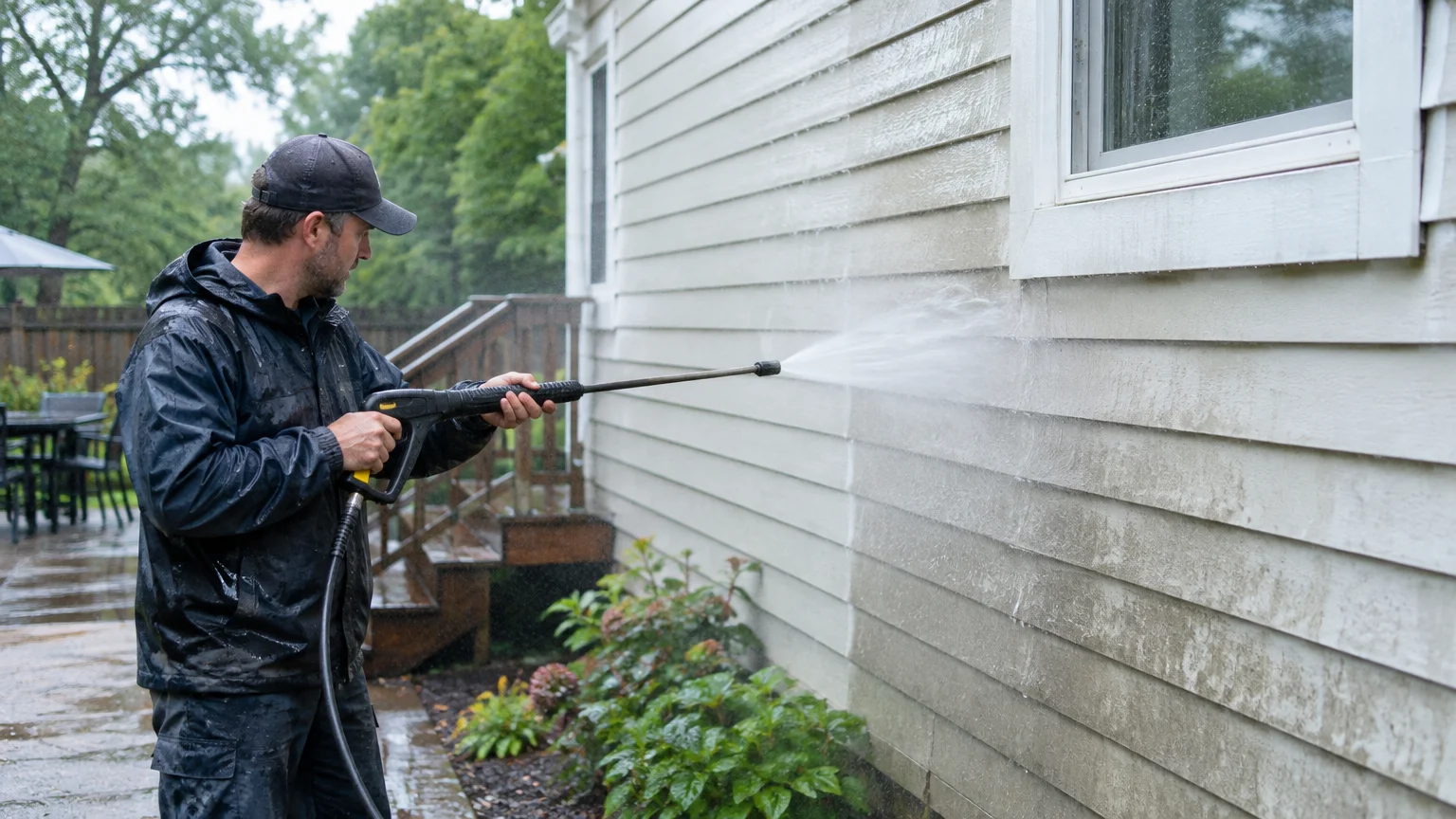
Power washing teak furniture can be safe when the pressure is low, the nozzle stays back, and the spray keeps moving. Teak is strong, but a hard, close stream can cut the grain, loosen joints, and leave rough marks. A mild cleaner, soft brush, and full drying time help protect outdoor furniture.
Teak furniture can last for many years outside. Dirt, pollen, mildew, and old finish can still make it look dull. The best cleaning method depends on the wood’s age, finish, and condition. This guide explains how Los Angeles homeowners can clean teak with care and when expert help may be safer.
Table of Contents
- Can you power wash teak furniture safely?
- What should you do before cleaning teak furniture?
- What pressure and nozzle should you use on teak?
- Which cleaning solution is best for outdoor teak furniture?
- How do you clean teak furniture without raising the grain?
- How should you restore and protect cleaned teak furniture?
- When should you hire a professional to clean outdoor furniture?
- Frequently Asked Questions
- Key Takeaways
- Conclusion
Can you power wash teak furniture safely?
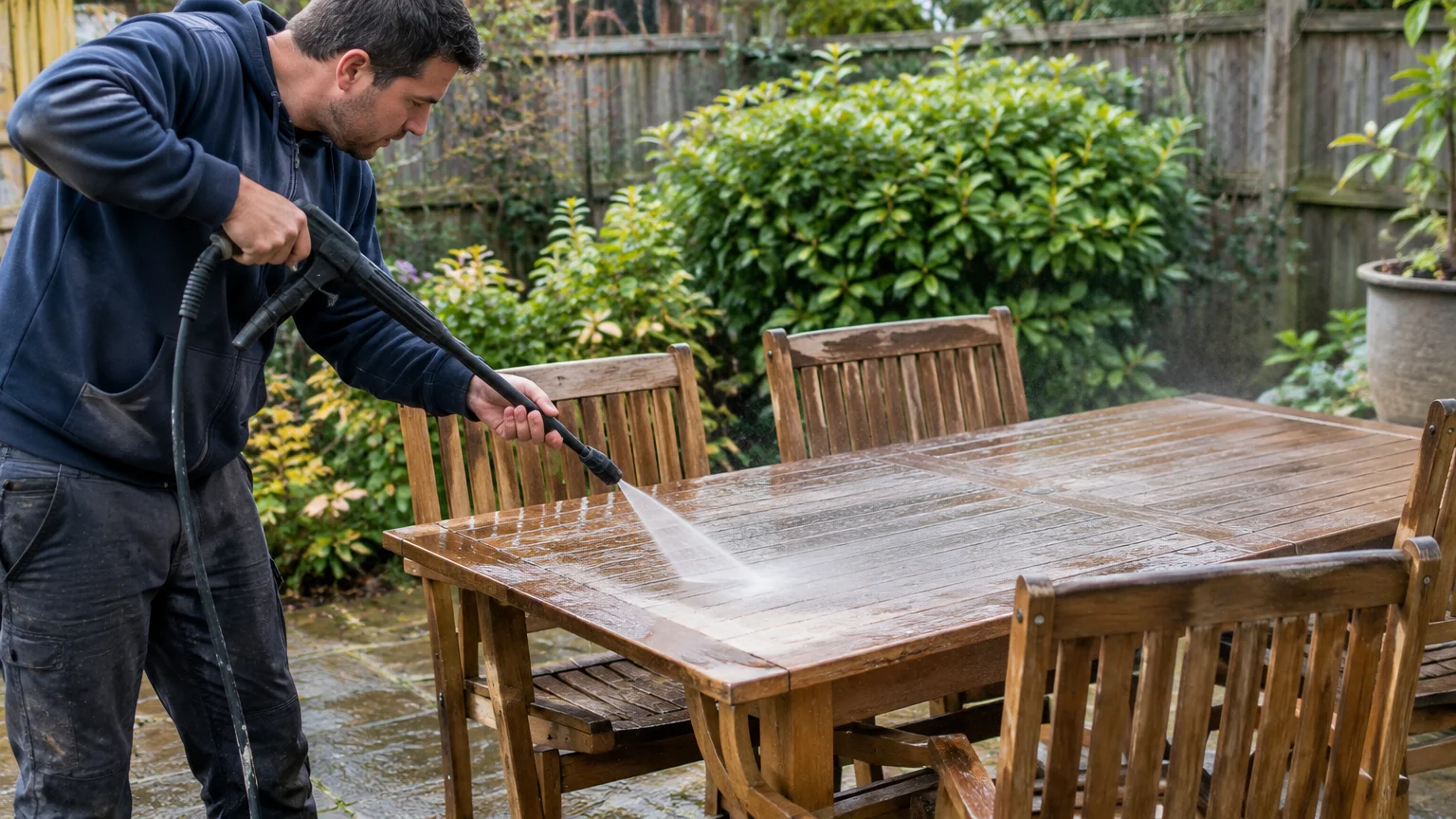
Power washing teak furniture can be safe with a gentle setup and careful control. Teak is a dense hardwood, but its surface can still suffer damage from a sharp spray held too close. The goal is to remove dirt without cutting into the wood.
How teak responds to water pressure
Teak has natural oils that help it handle outdoor moisture. Still, pressure washing does more than remove dirt. It can also remove loose fibers, old coatings, and soft spots caused by weather or decay. A piece that looks clean may feel fuzzy or rough after a wash that is too strong.
Many teak pieces turn silver-gray as they age outside. This color change is normal. It does not always mean the wood needs oil. Green growth, black spots, and sticky grime need more care than normal gray weathering. A gentle wash can remove these marks and leave the surface more even.
When power washing may cause damage
Damage is more likely with a narrow nozzle, high force, or short spray distance. The water stream can leave lines that match the spray path. It can also push water into loose joints, cracks, screw holes, and end grain.
Do not use a pressure washer on teak that is cracked, weak, peeling, or badly weathered without testing first. A soft brush and mild cleaner may be safer for fragile pieces. Los Angeles Power Washing can help property owners choose a method that fits the furniture’s condition.
What should you do before cleaning teak furniture?
Before washing teak furniture, inspect it and remove items that can hold water. A few minutes of preparation can help prevent stains, loose parts, and damage nearby. The furniture should be stable before you add water or cleaner.
Inspecting the wood, joints, and finish
Look for cracked boards, loose screws, open joints, split legs, and soft wood. Press lightly with a clean fingernail to find areas that feel weak or crumbly. These spots need repair before washing.
The old finish also matters. Paint, stain, oil, and sealer may react in different ways to water and cleaning products. Do not blast peeling finish away unless you plan to refinish the piece. Test a small area under the seat or behind a leg. This shows how the surface may react.
Removing cushions, hardware, and surface debris
Remove cushions, umbrellas, covers, trays, and other loose items. Take off hardware when possible, especially parts that may rust or hold dirt. Sweep away leaves, sand, and loose soil with a soft brush before adding water.
Protect nearby walls, plants, floors, and fabric. Move the furniture where dirty water can drain safely. If the piece sits on a wood deck, use extra care. Deck boards can also mark under a strong stream. Deck Cleaning Services may help when the deck and furniture need cleaning together.
What pressure and nozzle should you use on teak?
A low-pressure, wide spray is usually safer for teak than a narrow, hard stream. The right setting depends on the washer, nozzle, distance, and wood condition. Begin with the least force that can remove the soil.
Choosing a gentle cleaning setup
A wide fan nozzle spreads water across a larger area. This lowers the chance of cutting a line into the wood. A garden hose with a spray attachment may be enough for light dust and pollen.
If you use a pressure washer, start at a low setting. Never test it first on the most visible surface. Test an underside or hidden corner, then check the area after it dries. If the wood looks fuzzy, striped, or lighter in one spot, the spray is too strong or too close.
People often search for power wash pressure settings, Ryobi pressure washing tips, or a pressure washing machine rental before starting. The brand matters less than control. Rental machines can be hard to manage because each washer sends water at a different force.
Why distance and steady movement matter
Keep the nozzle well away from the wood. Move it in smooth, even passes, and never stop over one spot. Spraying with the grain may help create a more even result, but it does not make high pressure safe.
A steady pace protects the surface better than short, repeated bursts. Rinse often and check the wood while it is damp. A pressure washing rental may seem useful for one project, but a soft brush and hose may be better for delicate furniture.
Which cleaning solution is best for outdoor teak furniture?
A mild cleaner made for outdoor wood is a good starting point for teak. The label should say that it works on wood and outdoor furniture. Strong chemicals can change the color of teak, harm plants, or damage a protective finish.
Selecting a wood-safe cleaner
Choose a cleaner that lifts dirt, mildew, and pollen without hard scrubbing. Mix and use it exactly as the label says. More cleaner does not mean better cleaning. A soft nylon brush can work the solution into grooves and slats.
Test the cleaner on a small hidden area first. Let that spot dry before you judge the result. Teak may look different when wet, so a quick look may not show a lasting color change.
For light cleaning, clean water and a soft brush may be enough. For mildew or dark marks, a wood-safe product may help. Keep the cleaner wet only as long as the label says. Then rinse it away fully.
Solutions and tools to avoid
Avoid wire brushes, metal scrapers, and rough sanding during a basic wash. These tools can scratch the surface and leave deep marks. Household bleach, strong degreasers, and unapproved acids can also change the wood’s color.
Never mix cleaning products. Mixed chemicals can create harmful fumes or unsafe reactions. Keep children and pets away until the area is rinsed and dry. A safe plan protects both the furniture and the people who use the outdoor space.
How do you clean teak furniture without raising the grain?
The safest method uses a mild cleaner, soft brush, low water force, and enough drying time. Work in small sections and avoid holding the spray in one place. This removes soil while lowering the chance of lifted fibers.
A careful step-by-step washing method
- Move the furniture to a safe work area and remove loose items.
- Dry-brush the surface to remove leaves, dust, and loose dirt.
- Wet a small section with a hose or gentle spray.
- Apply a wood-safe cleaner and let it work as directed.
- Brush with the grain using light pressure and short passes.
- Rinse from top to bottom with a wide, gentle spray.
- Check for missed soil and repeat only where needed.
The brush should do most of the cleaning. The washer should help rinse, not carve dirt away with force. This matters around edges, carved details, seat slats, and joints.
Rinsing and drying the wood properly
Rinse until no cleaner remains in seams or corners. Leftover soap can leave a dull film and attract more dirt. Turn the piece or open moving parts so trapped water can drain.
Let the furniture dry in a bright, well-ventilated place. Do not put cushions back on damp wood. The furniture may need more than one day to dry. Drying time depends on shade, humidity, airflow, and wood thickness. Do not apply oil, stain, or sealer while the surface feels cool or damp.
How should you restore and protect cleaned teak furniture?
After cleaning, teak can weather naturally or receive a product made for outdoor wood. Neither choice suits every piece. Your choice depends on the color you want, the old finish, and the care plan you can follow.
Deciding between natural weathering and refinishing
Natural teak slowly changes from warm brown to soft gray outdoors. This is a normal surface change, not proof that the wood is failing. Owners who like the gray look may only need regular gentle cleaning and drying.
Those who want a warmer color may choose teak oil, sealer, or stain. These products can change the care routine. Some need repeat applications. Others may darken uneven areas if the wood was not prepared well.
A clean, dry surface is needed before adding any finish. Old oil, flaking sealer, or uneven stain may need removal first. Never use a finish to hide loose fibers or structural damage.
Preparing teak for oil, sealer, or stain
Read the product label before applying anything. Follow its drying time, weather limits, and surface steps. Apply a small test coat first because teak can absorb products unevenly.
The furniture must be free of cleaner residue and fully dry. Use thin, even coats with the right tool. Wipe away extra product when the label says to do so. Good airflow helps the finish cure. Keep cushions off the furniture until the surface is ready.
Professional help can also support nearby Outdoor Structures and Furniture. Pergolas, railings, awnings, outdoor kitchens, and deck surfaces may need different methods. Treating every material the same can cause avoidable damage.
When should you hire a professional to clean outdoor furniture?
A homeowner does not always need a professional for light dust, routine rinsing, or mild surface cleaning. You can often handle these tasks when the furniture is sound and easy to reach. Expert help is useful when the wood is fragile, the finish is failing, or several outdoor materials need care.
Signs the furniture needs specialized care
Professional help may be wise when the furniture has:
- Deep cracks, loose joints, soft wood, or unstable legs.
- Heavy mildew or dark staining that stays after mild cleaning.
- Peeling oil, stain, paint, or sealer across much of the surface.
- Delicate carvings, built-in parts, or hard-to-reach areas.
- Nearby decks, fences, walls, plants, or outdoor kitchens needing protection.
A skilled cleaner can inspect the surface, test a method, and adjust water force. They can also explain whether cleaning is enough or whether repair and refinishing should come first.
How professional cleaning supports decks and outdoor living areas
Outdoor furniture often sits beside a deck, patio, fence, or pergola. Cleaning one item may reveal soil across the whole space. A shared plan helps stop clean furniture from being splashed by dirty nearby surfaces.
Los Angeles Power Washing provides local guidance for outdoor cleaning projects across the Los Angeles area. This includes Downtown Los Angeles, Hollywood, Beverly Hills, Glendale, Culver City, Santa Monica, and nearby communities. The team can help property owners choose a safe method for teak, composite surfaces, railings, and other outdoor areas.
Frequently Asked Questions
Can a pressure washer damage teak furniture?
Yes. A strong stream can cut the grain, leave stripes, remove soft fibers, and force water into joints. Damage is more likely when the nozzle is narrow or close to the surface. A wide spray, low setting, steady movement, and hidden-area test can lower the risk.
Is it better to use a hose or a pressure washer on teak?
A hose is often enough for dust, pollen, and light soil. A pressure washer may help with heavier buildup, but it needs careful control. If the teak is old, cracked, or rough, hand washing with a soft brush may be safer.
Should teak furniture be oiled after cleaning?
Not always. Teak can weather naturally to gray without oil. Owners who prefer a warmer color may use teak oil or another outdoor wood finish. The wood must be clean and fully dry first. Test the product in a hidden spot before covering the whole piece.
How often should outdoor teak furniture be cleaned?
There is no single schedule for every piece. Light cleaning when dirt appears can prevent heavy buildup. Furniture under trees, near pools, or in damp shade may need care more often. Regular checks are better than waiting until grime becomes hard to remove.
Can a rental pressure washer clean teak safely?
It can, but rental machines vary in power and spray control. A new user may choose too much force without noticing. For valuable or fragile furniture, a hose and soft brush may be safer. A professional can also manage the cleaning when the risk is high.
Key Takeaways
- Teak can be washed safely when water force is low and the spray keeps moving.
- A wide fan spray and soft brush help reduce grain damage.
- Testing a hidden area can show whether the method is too harsh.
- Furniture must dry fully before oil, stain, or sealer is applied.
- Fragile, cracked, or heavily finished pieces may need professional care.
Conclusion
Power washing teak furniture is not about using the strongest machine. It is about using the least force that removes soil while protecting the wood. Careful inspection, a mild cleaner, gentle pressure, and full drying can help outdoor furniture stay useful and attractive.
Los Angeles Power Washing helps homeowners and property owners plan outdoor cleaning. Contact us to arrange careful service for teak furniture, decks, fences, and related outdoor areas.