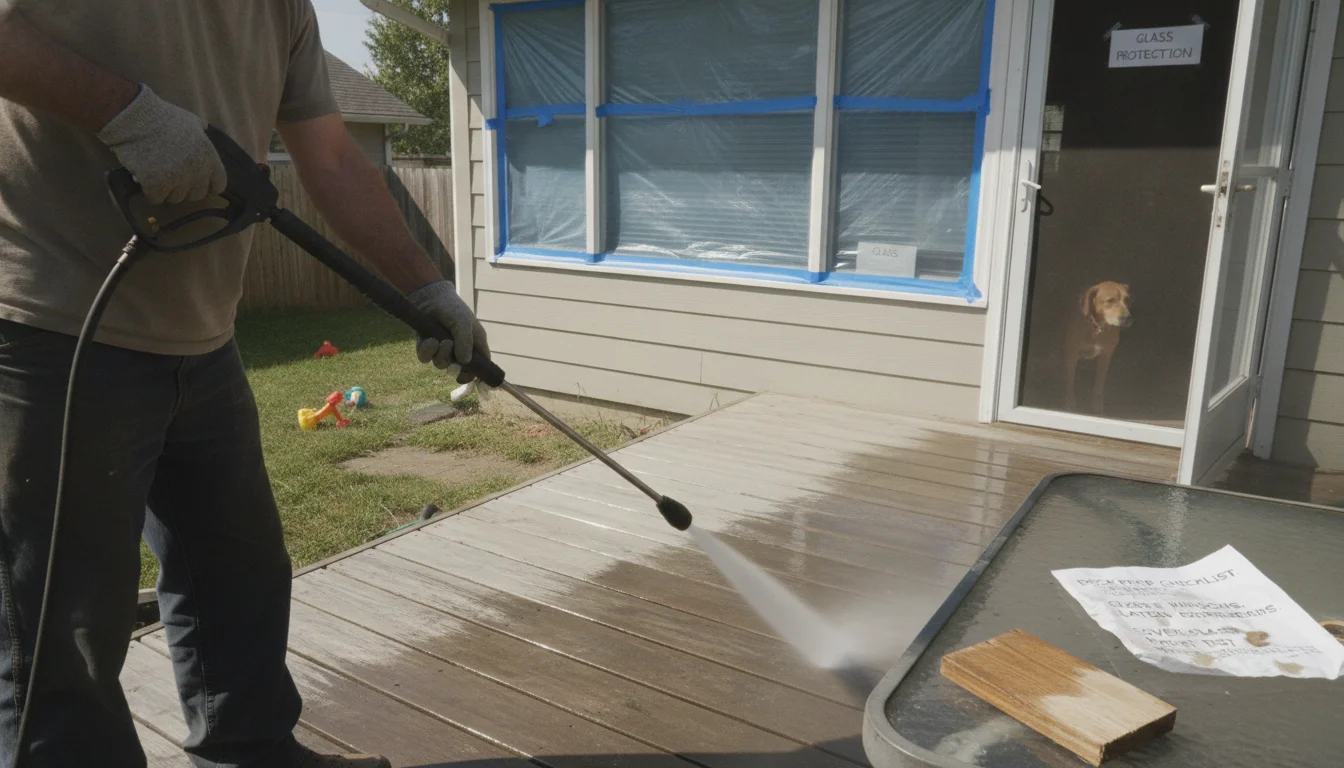
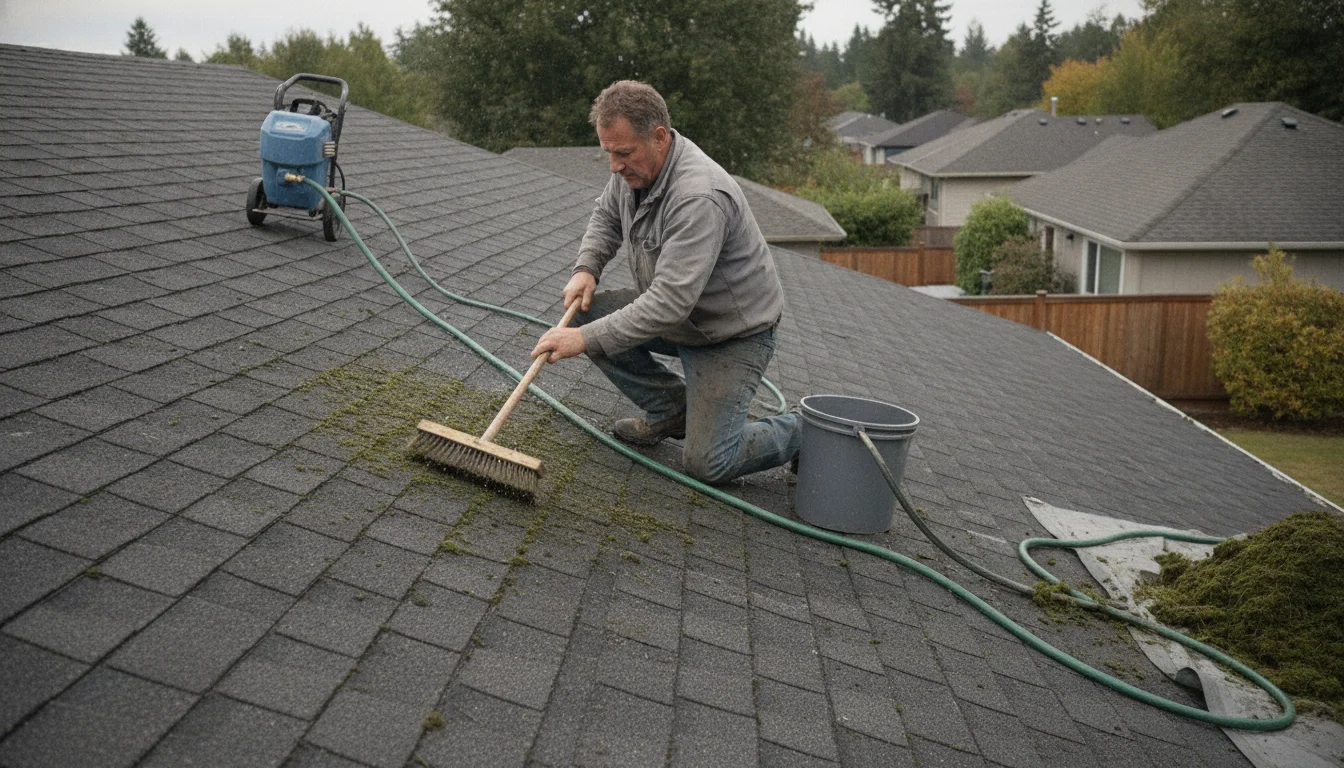
Dark streaks on stucco can appear quickly, and blasting them with a pressure washer can harm the finish. The safe answer is soft washing stucco, which uses low pressure and a gentle cleaning mix to remove algae, mildew, and stains without damaging the surface. In Los Angeles, this method helps walls last longer by cleaning and treating the cause of growth rather than just pushing it around.
Key takeaways:
- Soft washing treats stains and kills growth using low pressure and a targeted mix.
- High pressure risks etching, water intrusion, and peeling paint.
- Aim for about 100–300 PSI at the surface with a wide fan tip; typically stay under 500 PSI.
- Clean methodically: apply, dwell briefly, and rinse gently to protect the finish.
Los Angeles Power Washing trains technicians to treat stucco the right way. The team understands how forcing water into hairline cracks can lead to expensive repairs. This guide explains how to clean stucco, EIFS (Exterior Insulation and Finish System), brick, and painted exteriors safely—step by step—so you can protect your property in Los Angeles.
Soft Washing 101: What It Is and How It Protects Stucco
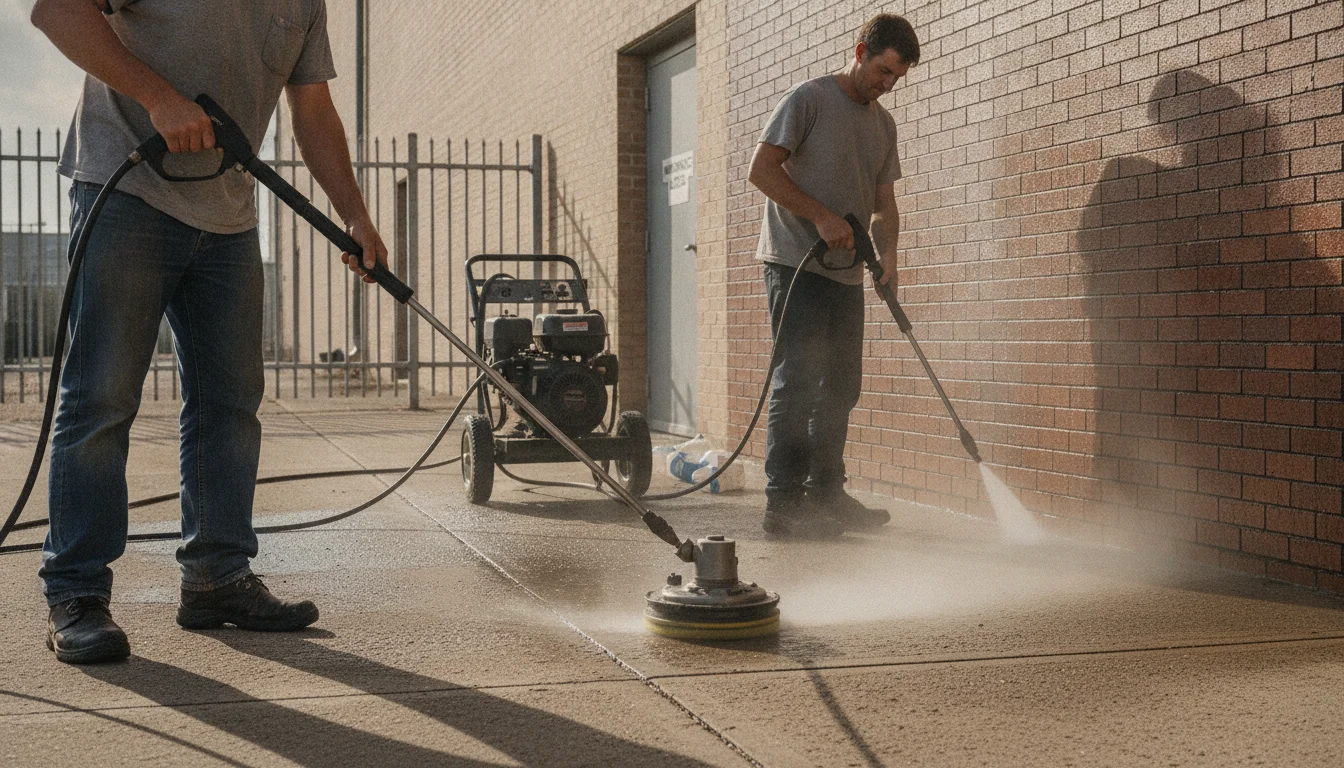
Soft washing uses low pressure and a carefully mixed cleaner to lift stains and kill organic growth. By contrast, pressure washing relies on high PSI to blast debris from the surface. In a soft wash vs pressure wash comparison on stucco, chemistry and controlled flow win because they remove contamination without driving water into the wall. This makes soft washing ideal for stucco, EIFS, and older painted masonry.
Stucco and EIFS are porous, and their thin finish coat can be delicate. Painted masonry can turn chalky as paint oxidizes. High force can etch the face, push water behind the finish, and strip aging paint.
For fragile walls, keep rinse pressure low—often 100–300 PSI at the surface and typically under 500 PSI. Use a wide fan tip (40°–60°), and keep the wand back so the stream behaves like a strong garden hose, not a cutting jet. When uncertain, test a discreet spot first. If you want a whole-home plan, consider Soft Washing Services or House Washing Services from a qualified local provider like Los Angeles Power Washing.
Risks of High Pressure: Cracks, Water Intrusion, and Stains
High PSI can drive water behind stucco and EIFS, where trapped moisture may swell, crack, or blister the finish and feed hidden mold. It may also etch the face coat, leaving rough scars, and on painted walls it can cause peeling.
Another common issue is gray or black smearing from oxidized paint, which often looks worse after a harsh wash. Blasting also leaves root spores behind. That is why aggressive cleaning can make mold and mildew return faster—you removed surface stains but did not sanitize the growth. Soft washing solves this by cleaning and treating in one step.
The Safe Stucco Cleaning Process Step-by-Step
Work deliberately, protect the wall, and let the cleaning mix do the heavy lifting.
- Pre-inspect the surface. Note cracks, soft spots, rust, and peeling paint. Test a small, low-visibility patch. Pre-rinse or cover plants, windows, and metals.
- Select detergents that target organic growth. A mild sodium hypochlorite solution—often 1%–2% on the wall—plus a surfactant helps the mix cling and clean. Add an algaecide if needed. Always follow label directions.
- Apply bottom to top to minimize streaks. Keep flow gentle. Watch for runs; lightly brush heavy buildup if required.
- Allow a 5–10 minute dwell time out of direct sun. Do not let the mix dry; re-wet areas that start to dry so chemistry remains active.
- Rinse top down with low pressure using a 40°–60° tip. Keep the nozzle well back so the rinse sheets off rather than cutting in.
- Post-rinse neutralizing. Rinse plants, windows, and metals again. Use a plant or bleach neutralizer where recommended. Walk the site to touch up any missed spots.
For large elevations or stubborn stains, a pro offering Soft Washing Services can work faster and more safely with purpose-built pumps, tips, and cleaners.
Ongoing Care, Weather Timing, and When to Hire a Pro
Plan washing for mild weather with no heavy rain expected. In Los Angeles, spring and fall often provide ideal temperatures and shade. Most homes benefit from a gentle exterior wash every 12–24 months, depending on shade, nearby trees, and airborne dust.
Treat problem spots early. Rust often responds to an oxalic-based cleaner. Efflorescence (white, powdery salts) needs a light, masonry-safe cleaner and a careful touch. Organic stains like algae respond well to a mild soft-wash mix.
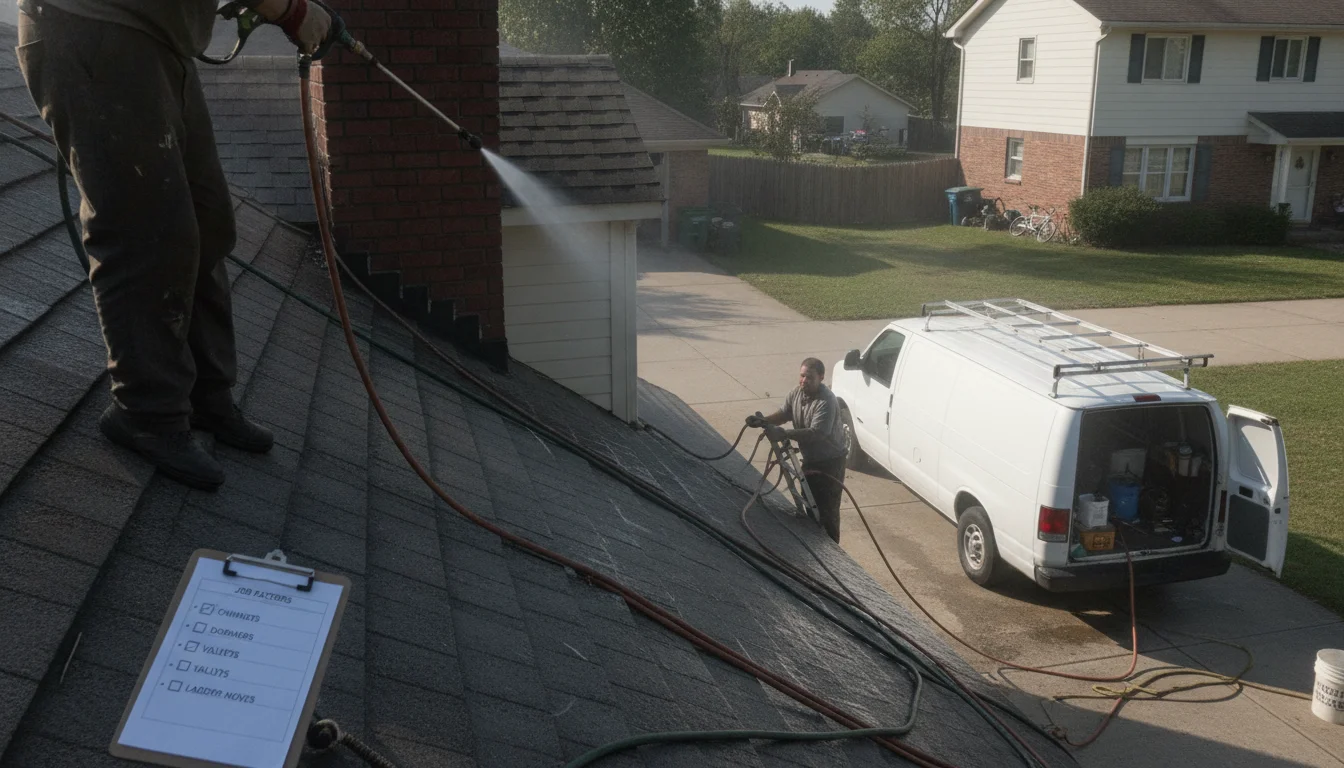
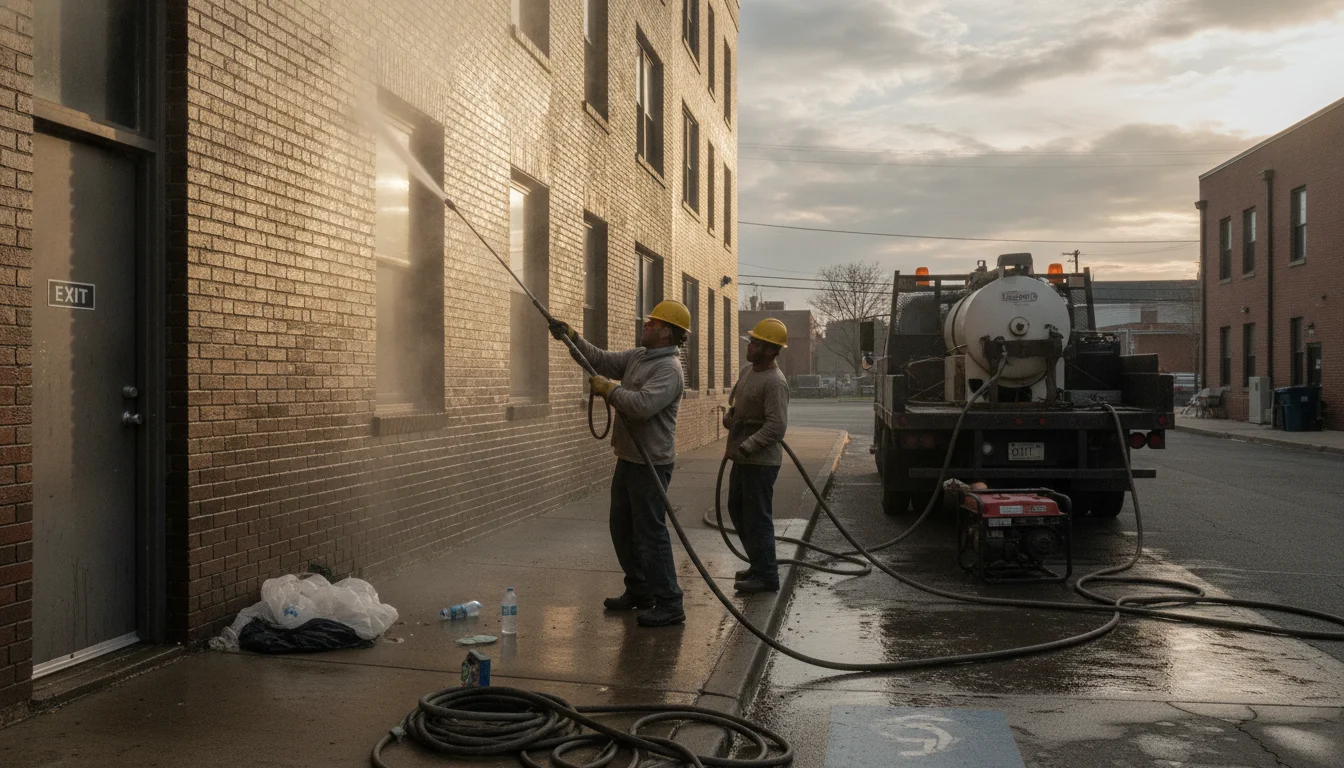
Consider risk along with price when comparing soft wash vs high-pressure methods. While pressure washing costs may seem attractive for a quick blast, potential repairs from etching or water intrusion can outweigh short-term savings. Red flags for professional help include very tall walls, loose or cracking stucco, heavy oxidation, evidence of leaks or past water intrusion, and deep rust or paint failure. Los Angeles Power Washing works across Los Angeles weekly with ladders, safety gear, and low-pressure systems to handle these conditions. They can also assist with Pressure Washing Services or Building Washing Services where higher pressure is appropriate and safe.
Frequently Asked Questions
How is soft washing different from pressure washing on stucco?
Soft washing uses low pressure and a targeted cleaner to kill algae, mildew, and mold, then rinses gently. High-PSI pressure washing can etch stucco and drive water behind the finish. For stucco and EIFS, soft washing cleans safely and slows regrowth by treating the source. This is the key soft wash vs pressure wash distinction on delicate surfaces.
What mix is safe for cleaning stucco?
A mild sodium hypochlorite solution—often 1%–2% on the surface—plus a surfactant is common for soft washing stucco. Pre-wet plants and metals, apply bottom-up, allow a short dwell time, then rinse gently. Always follow product labels and test a small area first.
Can I use a pressure washer if I stand far away?
Distance helps but risk remains. Even from farther back, a narrow tip or an accidental close pass can etch stucco or force water behind the finish. Use a wide fan tip at very low pressure—or choose a true soft wash. When unsure, bring in a trained pro to avoid lasting damage.
Key Takeaways
- Soft washing protects stucco using low pressure and a gentle cleaning mix.
- High PSI can etch finishes and force water inside, leading to cracks and stains.
- Use wide fan tips and test spots; aim for about 100–300 PSI at the surface.
- Apply, allow brief dwell, and rinse gently; neutralize plants and metals.
- Hire a pro for tall walls, existing damage, or stubborn stains to avoid repairs.
Conclusion
Clean stucco the safe way: use low pressure, the right chemistry, and careful technique so your walls look great and resist future growth. For safe, gentle service in Los Angeles, Contact us.